The Red Vineyard
The Only Masterpiece Sold During Vincent's Descent Into Despair.

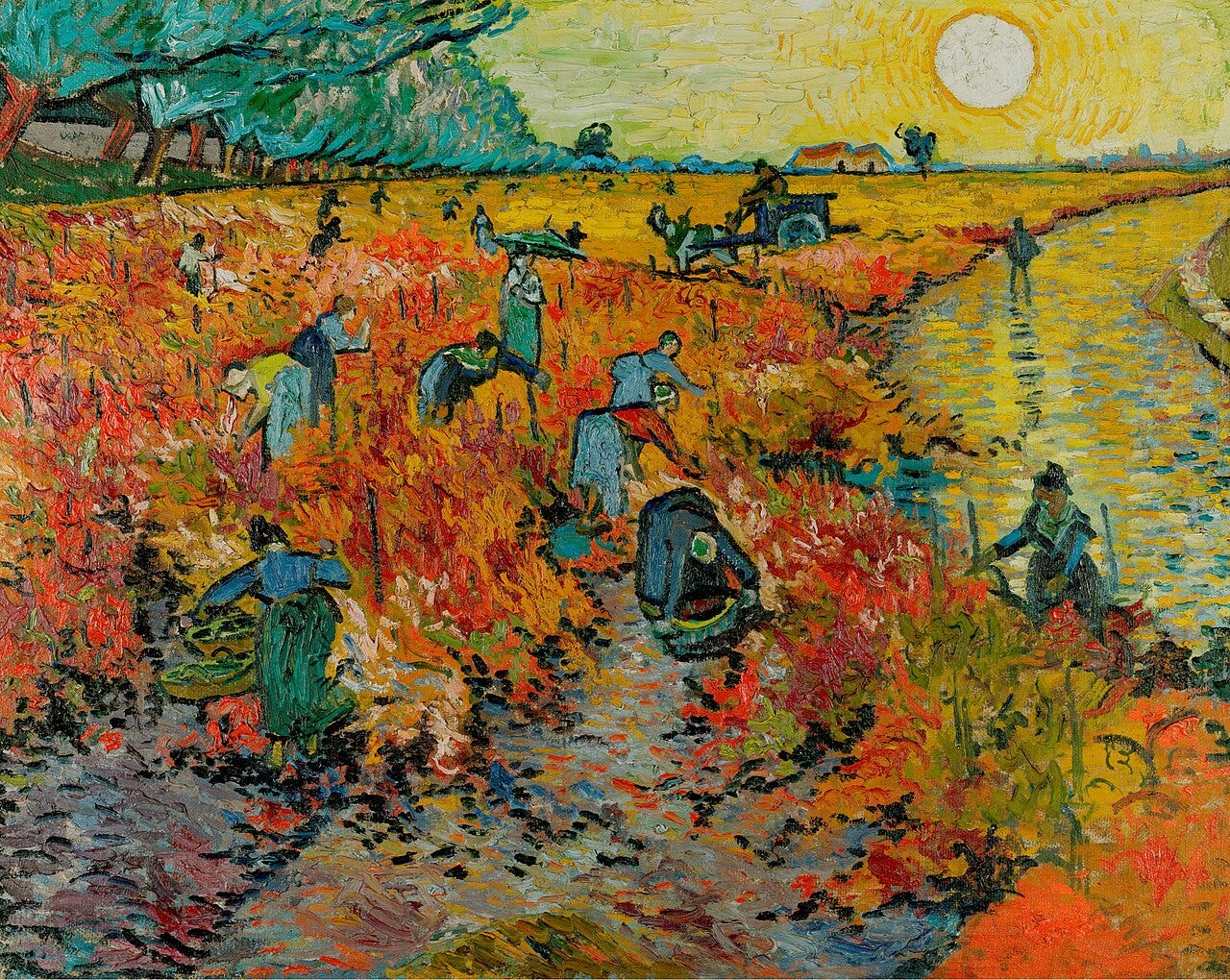
The Red Vineyard is set under a low autumn sun, you see rows of harvesters bent among leaves that are orange and red against a sky the color of pale butter. Vincent van Gogh painted this scene in Arles in November 1888, and the color alone feels like a refusal to let despair drain the world of its warmth. His letters to his brother Theo from that period are filled with requests for money, and with apologies for the cost of paint and canvas. Maybe what i am saying is that the painting radiates abundance while its creator was living in scarcity, and that difference is where this story really begins.
Van Gogh produced more than two thousand works in his lifetime, and yet this is the only piece with a documented sale while he was alive, purchased in 1890 by Anna Boch, a Belgian painter and collector, for 400 francs. He never saw the wave of recognition that would eventually make his canvases the most valuable objects in art history. He sold exactly one painting, and it happened less than a year before his death, at a moment when his mental health was already fracturing under the weight of institutionalization at Saint Paul asylum.
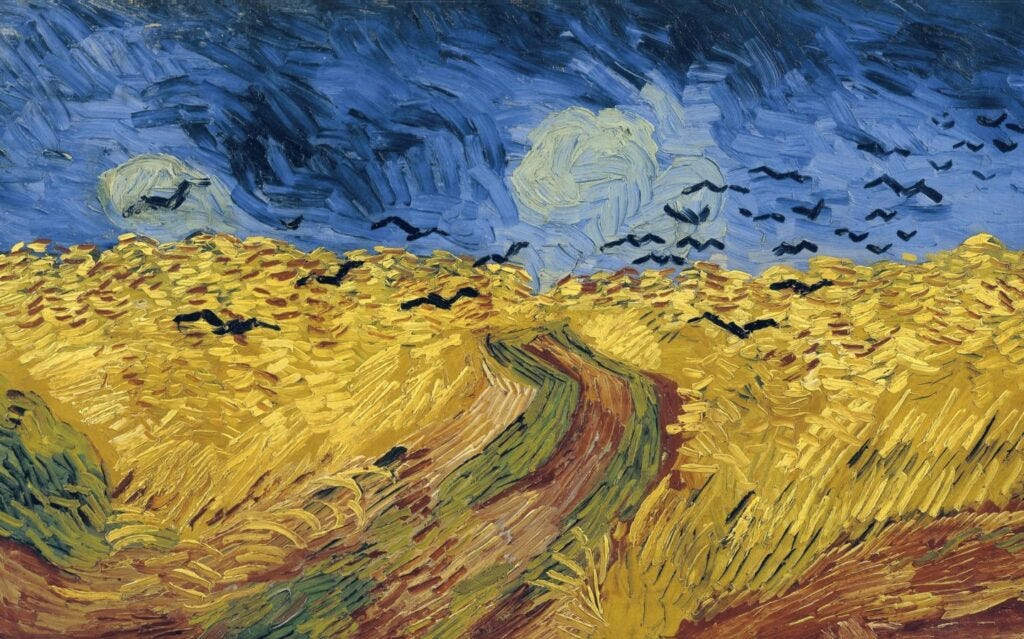
That timing raises a question that still unsettles art historians today. Why did this particular burst of saturated color emerge from a man edging toward crisis, rather than a canvas soaked in the darkness people expect from someone in psychological freefall. Some interprete the reds and oranges as body and mind trying to hold onto sensation before it slipped away. Van Gogh never explained the painting in those terms himself, which leaves the mystery open, and maybe that openness is exactly why the painting still pulls people in more than a century later.
