The Biphasic Watch
Why Medieval Peasants Woke Up In The Dead Of Night

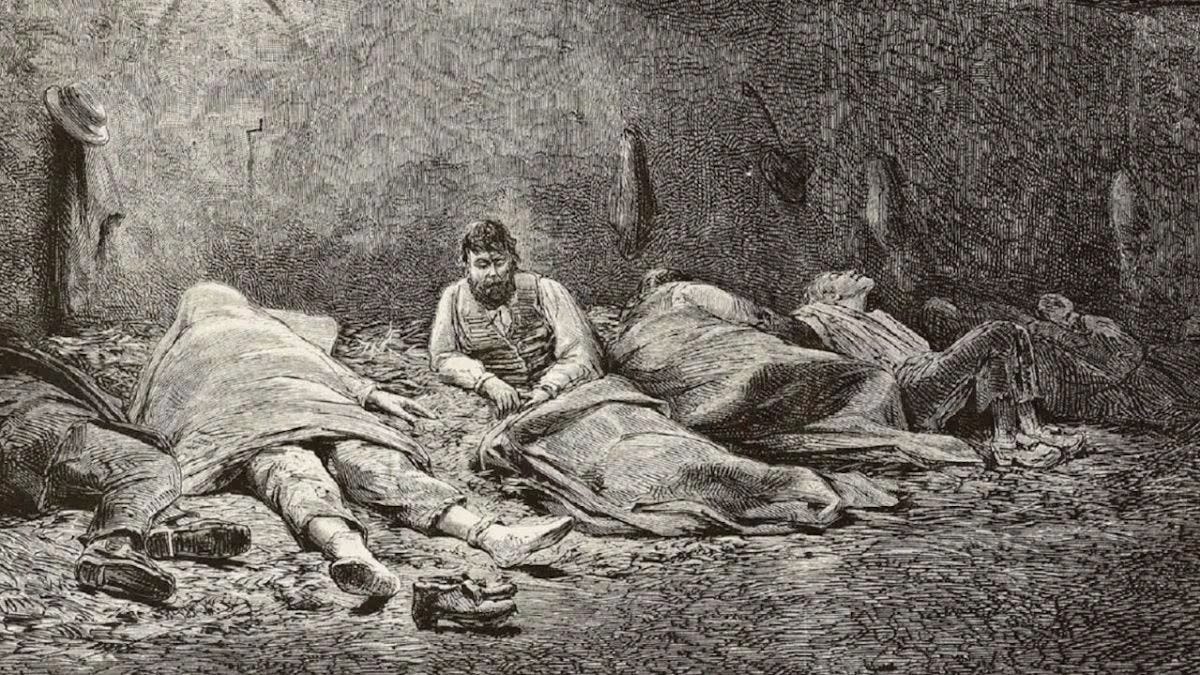
The eight-hour sleep block feels so natural that most people never question it. It’s alongside brushing your teeth and eating three meals as one of those things you just do. Millions of people fall asleep around ten, wake naturally around two in the morning, lie there restless for an hour or two, and then assume something is wrong with them. They search for insomnia remedies and stare at the ceiling in frustration, convinced their body has broken some rule. The rule, it turns out, was invented recently. Sleep medicine specialist David Neubauer at Johns Hopkins has put it plainly: consolidated sleep, as a single unbroken block, may be an artificial invention of modern life that is inherently unstable. So, when you’re wide awake at two in the morning, your body might just be tapping into something much older.
Historian Roger Ekirch spent years uncovering what preindustrial sleep actually looked like, and what he found was not the seamless slumber we strive to achieve. Sleep once commonly consisted of two major intervals: a first sleep and a second sleep, bridged after midnight by an hour or more of wakefulness in which people did practically everything imaginable. They rose to perform chores, tended to sick children, recited prayers, pondered their dreams. This pattern showed up across continents. A French priest traveling to Brazil in 1555 recorded that the Tupinamba people rose after their first sleep to eat, then returned to rest. In the early nineteenth century, residents of Muscat in Oman were said to retire before ten so that “before midnight their first sleep was usually over.” This was the default setting of the human body before electricity told it otherwise.
The Midnight Watch and the Watchman’s Hour

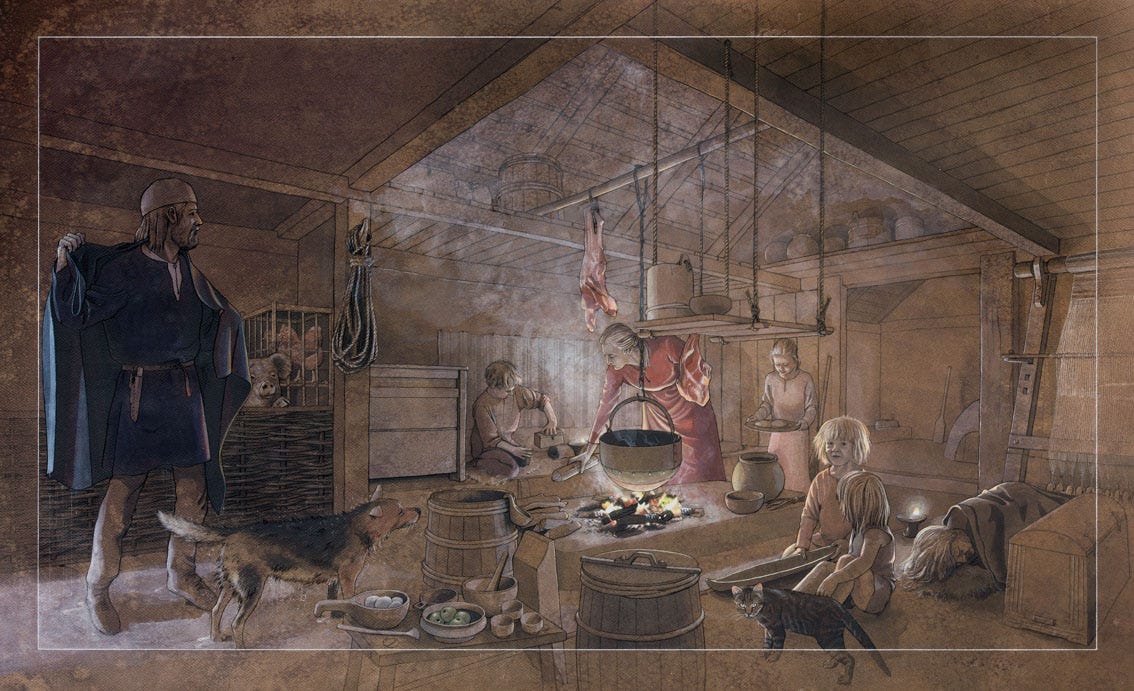
The window of wakefulness between the two sleeps was known as “the watch,” and it served a wide range of activities that varied significantly depending on social standing, from prayer and household chores to work and socializing. For a peasant household, the watch was less a pause than a second shift. Under the weak glow of the moon, stars, and rush lights made from the waxed stems of rushes, people would tend to ordinary tasks such as adding wood to the fire, taking remedies, or checking on farm animals, while others carried out household chores like patching cloth, combing wool, or peeling rushes to be burned. In rural cottages, couples talked in whispers while children slept nearby, since the day’s labour rarely allowed extended conversation. The watch created a pocket of time free from daylight obligations, and some early texts suggested that intimacy flourished most naturally during this middle period, when bodies had rested but dawn still lay distant.
Religious devotions also shaped the watch deeply. Christians used this time for prayer and meditation, treating it as a peaceful hour when the world was still. Clergy whose schedules included Matins at roughly two or three in the morning folded the watch into their religious routine, while by candlelight or moonlight people read, wrote, studied, and prayed. The watch, in other words, gave people structured time to simply think.
The Industrial War on Human Darkness
Before factories, time was not a resource that could be wasted. People read the light, the season, and the body. When the industrial revolution arrived, it intensified time-consciousness by leaps and bounds, compressing segmented sleep into a single cycle and recasting sleep itself as a waste of productive hours. Gas lighting made fifty European cities navigable after dark by 1700, and Baltimore became the first American city lit by gas in 1816. A century later, electricity in streets and in homes meant that nightfall no longer dictated anything. The darkness that had structured human rest for millennia became optional.
The clock made this permanent. Clocks had existed since the ancient world, but when Levi Hutchins of New Hampshire fashioned the first mechanical alarm clock in 1787 specifically to rouse him for work, it was a new understanding of the relationship between sleep and labor. Factories needed punctual workers, so reliable alarm clocks became essential for everyday people, turning a device that had once belonged only to churches and royal palaces into a household staple enforcing industrial schedules. And the body, which had always woken in the middle of the night to tend fires and pray and think, was now expected to remain unconscious and productive-by-morning on someone else’s timetable.
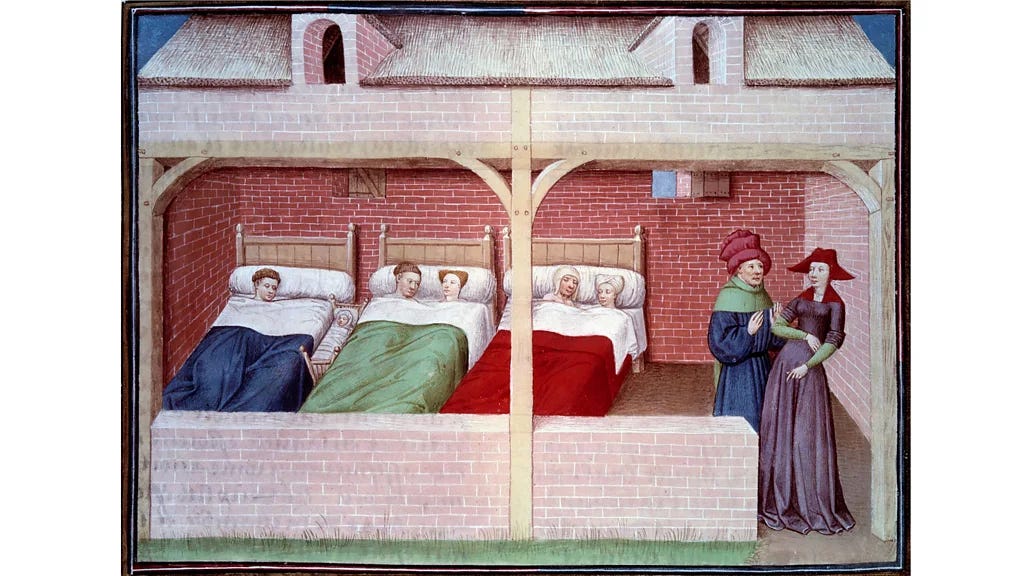
By the late nineteenth century, insomnia, defined as the inability to sleep restfully through a single sleep cycle, had been categorized as a medical disorder, marking the end of the era of unproblematic segmented sleep. As early as the 1820s, parenting books were advising the prompt weaning of children from the two-sleep pattern, and by the late nineteenth century in the United States, compulsory school attendance created yet another cultural pressure to conform to the new consolidated schedule. Before the introduction of factory shift work, Americans had commonly slept in two nightly periods supplemented by daytime naps. The new regimen of eight uninterrupted hours led directly to the pathologization of every other way of sleeping. A biological rhythm that humans had practised across every continent and across thousands of years was reclassified, within a single century, as something requiring treatment.
If this article on biphasic sleep gave you something to think about, a new way of seeing your own body or your own nights, please consider supporting it.
“light is an atrocity
warmth is a curse
darkness is the natural order of the universe”
-Vincent Bennett+The Acacia Strain from Sacred Relic
I first read about this some years ago and was heartened because my body tends to do this naturally, so I knew I wasn't weird for waking up at 3 am and doing stuff for 2 hours and then back to sleep.