Sirens and Shadows
The Psychological Horror of Homer’s Ancient Mythic Monsters

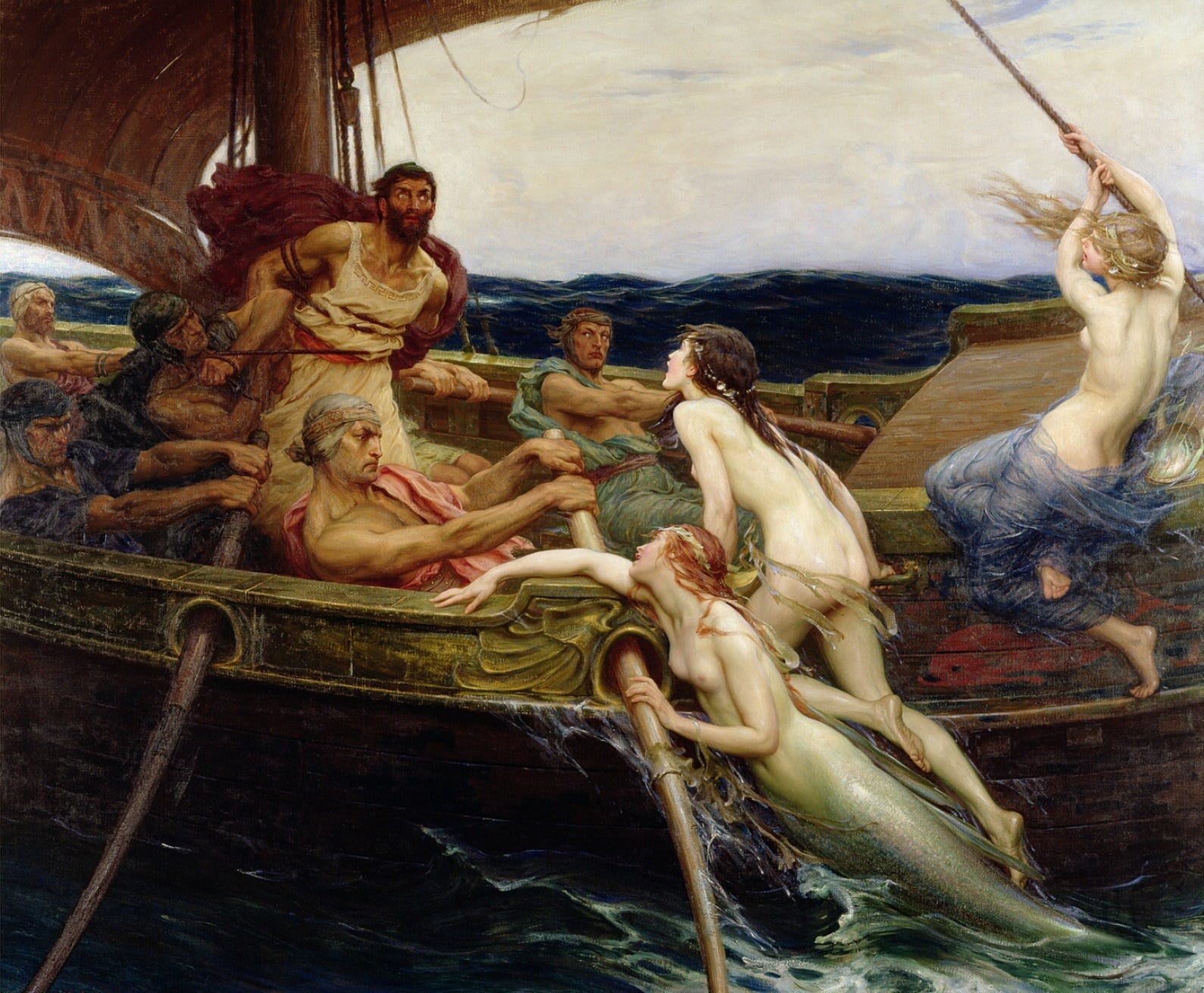
Sailors who heard Sirens lost their minds because the sound found a crack in their reasoning and slipped through it before logic even had a chance to respond. Homer never describes the melody itself, only its effect. The song worked like a parasite lodged in the ear canal, bypassing judgment and moving directly to something older than thought, the hunger for pleasure, and release that lives underneath every rational mind. A man could know exactly what waited on those rocks and still turn the ship toward them.
That same bypass runs through the phone in your pocket right now. From the infinite scroll, to the notification ping developed by teams who study attention the way ancient poets studied longing, these are Sirens with better funding. Nobody scrolls for three hours because they decided it was a good use of an evening. The decision gets skipped entirely, the same way Odysseus’s men skipped the part where they weighed the danger. A dopamine loop and a siren song have the same structure, which is a promise wrapped around a hook.
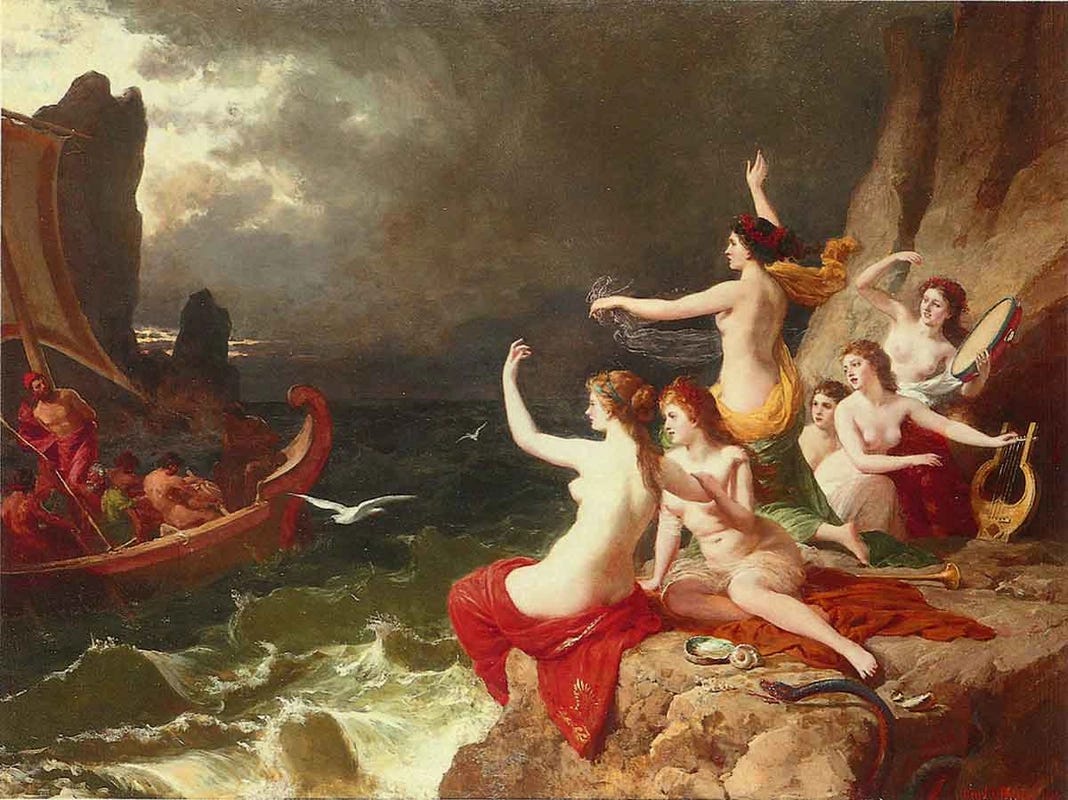
What makes the Sirens genuinely unsettling is that the song was never really about them. Ancient commentators noted that each man who heard it seemed to hear something different, his own unfinished business set to music. The monster was reflecting back whatever specific hole existed in the listener’s life. That is a far more disturbing kind of danger than a pretty face on a rock. It means the threat was never external at all. It all came from listener’s own personal lack, handed back to him in a voice he could not help but follow.
The Horror of Lost Agency
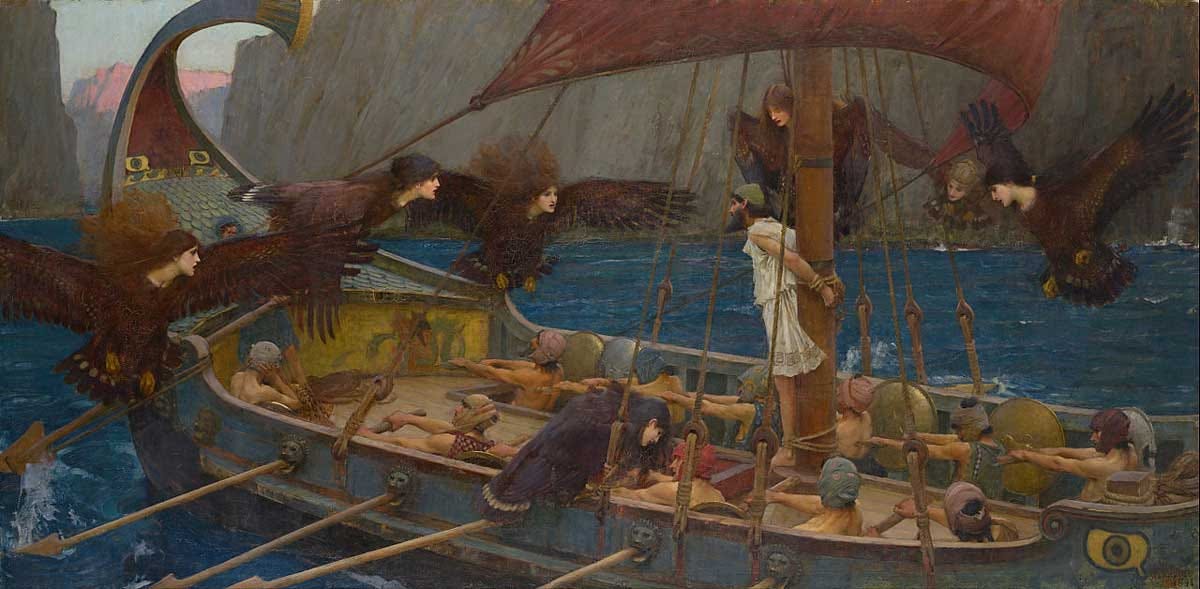
I want you to imagine the men rowing past those rocks with wax sealed in their ears, watching their captain thrash against the ropes, with his face twisted toward the sound only he could hear. Odysseus was fully awake to what was happening to him. He knew the rocks meant death and he strained toward them anyway. That particular horror of watching yourself want the thing that will destroy you while some smaller part of your mind stands off to the side taking notes on the disaster, is scarier than any monster.
Psychologists have a name for a milder version of this feeling, the call of the void, that sudden flash of wondering what would happen if you jerked the wheel into oncoming traffic or stepped off the platform edge. Most people feel it once and never mention it again, getting relieved when it passes. It terrifies us so much because it exposes something we spend most of our lives ignoring, that the same mind keeping us alive also contains the exact blueprint for our own destruction.
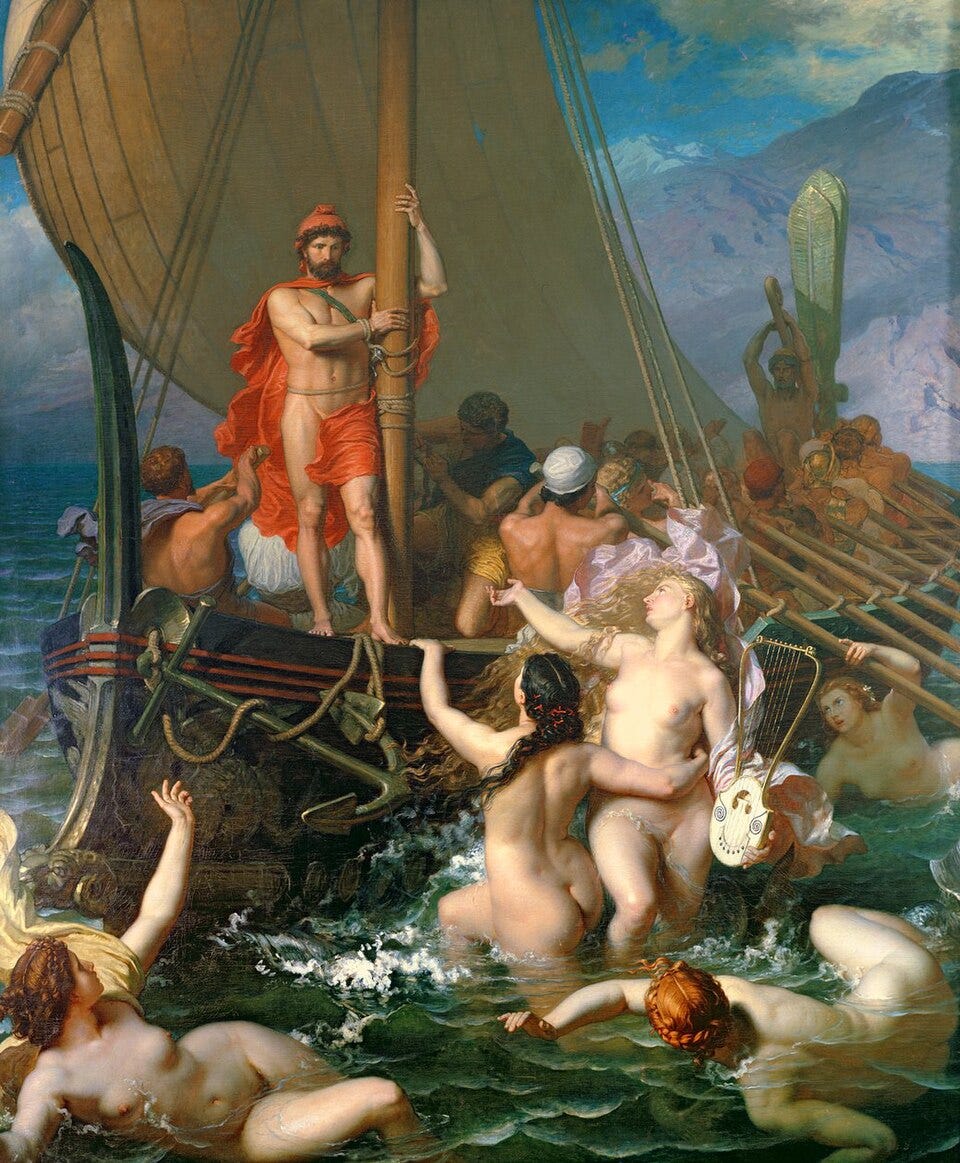
Odysseus solved this problem with a piece of foresight that is still relevant today, he had his future compromised self restrained by his present clear-headed self before the danger arrived. That is the entire logic behind modern pre-commitment devices, the gambling addict who bans himself from the casino, the phone locked in a timed box before bed, and the drinker who hands his keys to a friend before the party starts. None of these work by strengthening willpower in the moment, because the moment is exactly when willpower fails. They work because someone made a decision early, while sober and honest, and built a structure sturdy enough to survive contact with a version of themselves who could no longer be trusted. The mast was never really about the ship. It was about knowing yourself well enough to plan for your own betrayal.
Monstrous Reflections of the Subconscious
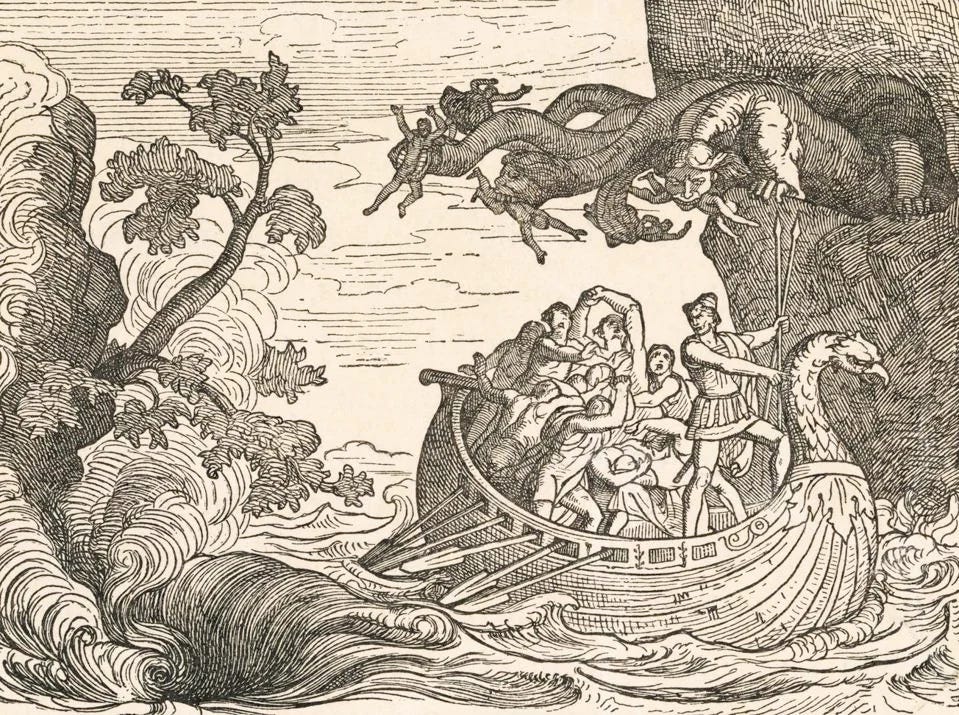
Odysseus survives the Sirens only to face a strait with no safe passage at all. On one side is Scylla, a six headed creature ready to snatch sailors from the deck. On the other, Charybdis, a whirlpool that swallows the entire ship whole. Circe tells him plainly that he must pick a loss, either a handful of men torn away one at a time or every soul on board pulled under at once. That impossible narrowing of choice captures something true about certain seasons of life, when every available path costs something precious and stalling only guarantees the worse outcome finds you anyway.
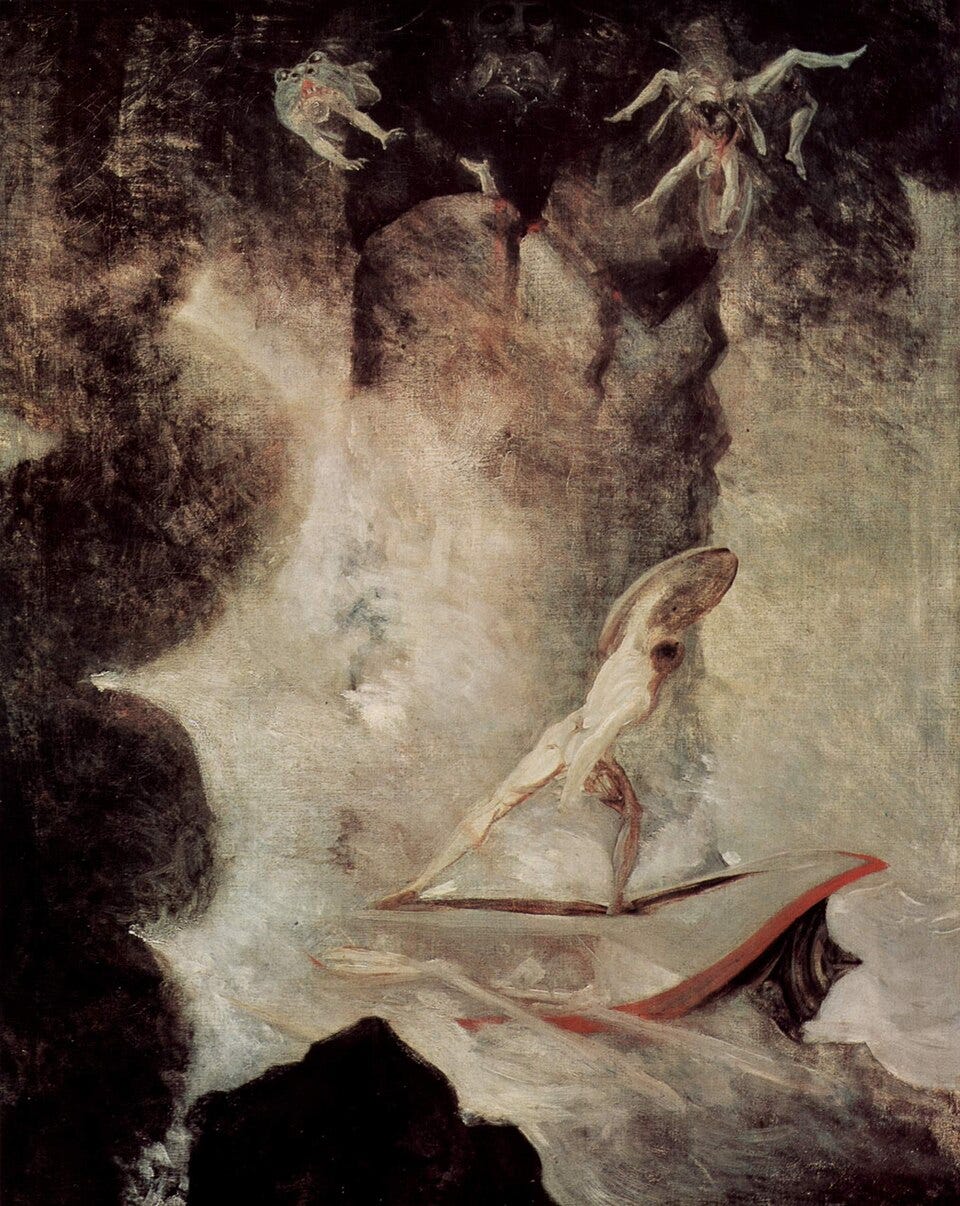
These two monsters are less like separate threats and more like a single trauma split into two faces. Scylla is the chronic anxiety that picks off pieces of a person gradually, a little sleep here, a little peace there, until years pass and something essential is missing. Charybdis is the sudden collapse, the breakdown that comes all at once and pulls everything under. Left unspoken and unexamined, internal pain tends to take exactly this shape, either eating a person slowly or swallowing them whole, and Homer gave both versions a body and a location so listeners could point at the strait and say there, that is what it feels like.
If you found value in wandering these old myths with me today, consider becoming one of the people keeping that door open for the next reader.
Completely brilliant
Love how this quietly overturn the whole willpower story. Odysseus didn't out-discipline the Sirens. He rearranged his environment in advance so discipline was never the thing being tested.
Pre-commitment works precisely because it moves the decision out of the moment of weakness and into an earlier, sober hand. You don't fight the song, you build a structure that meets it with rope instead of resolve.
The horror you name, watching yourself want the thing that will destroy you, is exactly why the fix can't live inside the wanting. It has to be built outside it, before. Enjoyable read. 🌿