Paint Me Poor
Why the Wealthiest Families in Europe Commissioned Their Own Decay

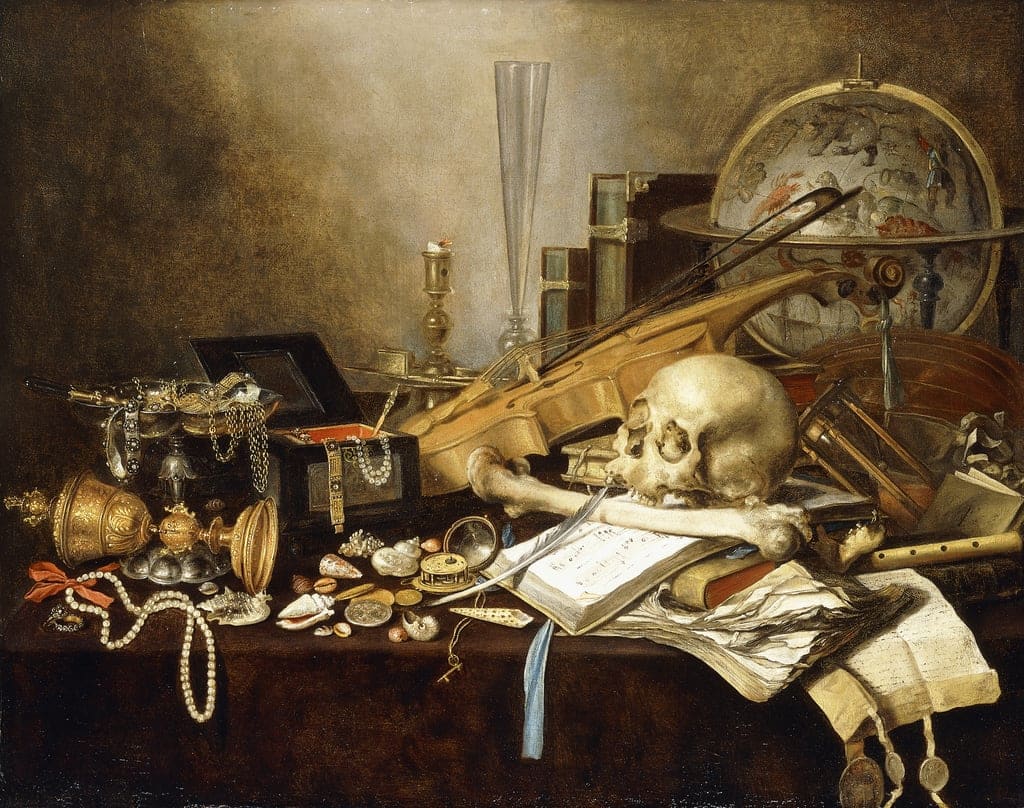
Every pearl and half peeled lemon in a vanitas painting was doing the same job that a curated grid does now, that is announcing that its owner had made it. The Dutch Republic in the 1600s ran on trade routes that stretched to Batavia and Brazil, and a household that could put a Turkish rug, and a fresh lemon on the same table was making a public claim about its reach into the world. These paintings were created to suggest status; the fruit was rarely local and the silk was rarely cheap, the artist’s job was to render both so convincingly that a viewer could almost smell the citrus from across the room.
A merchant class that had only recently climbed out of guild labor and modest trade into serious wealth needed a way to prove that wealth was earned through God’s favor and hard commerce rather than inherited excess, since the old aristocratic sin of vanity was still watching from the pulpit every Sunday. So the painters gave them an out. Load the canvas with luxury, then paint a fly landing on the peach or a candle guttering in its socket. The actual ingenuity of vanitas was that it let a household display everything it had acquired while insisting, in the same frame, that none of it actually mattered.
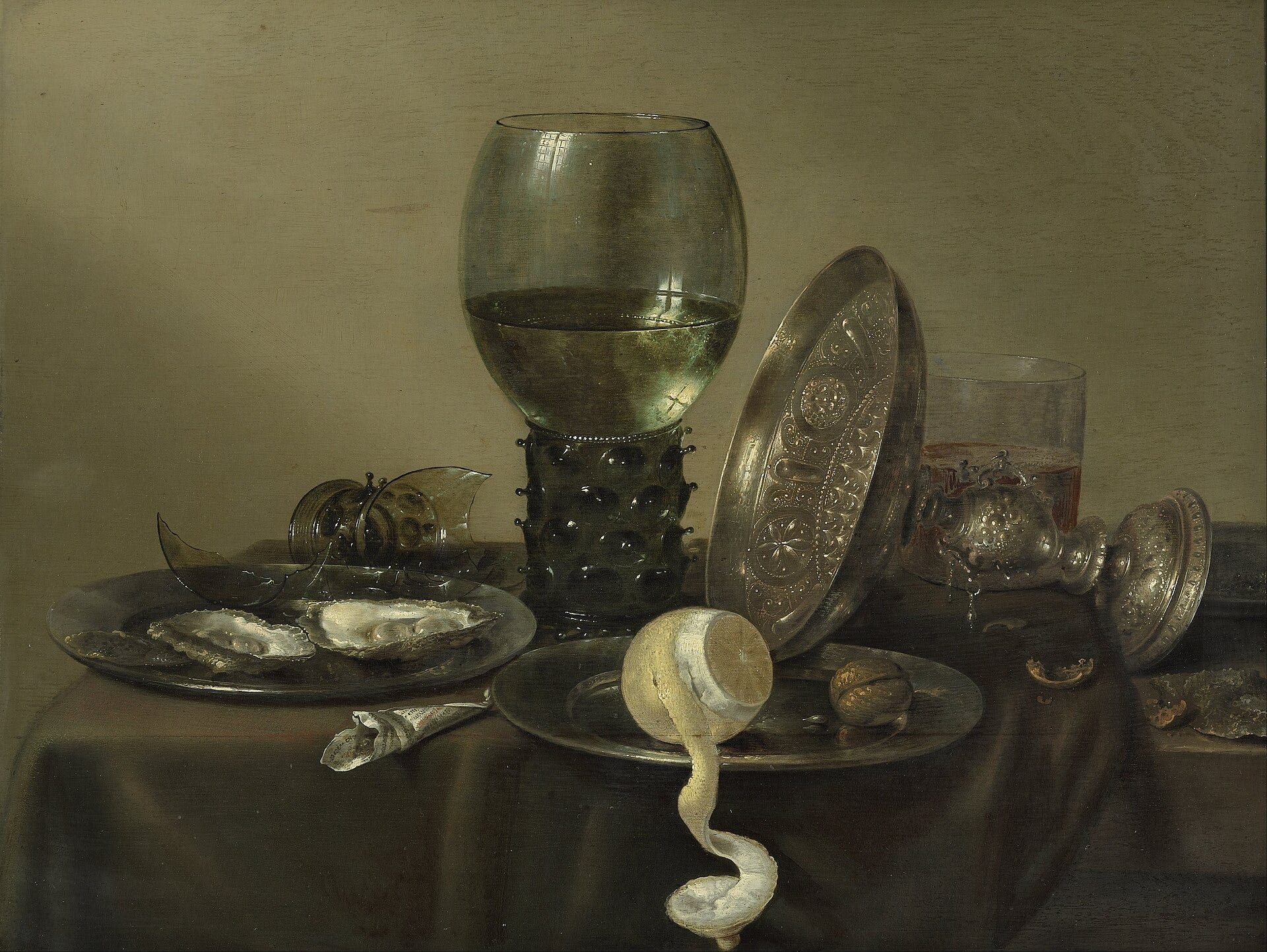
That insistence is where the paintings turn genuinely unsettling once you look past the initial dazzle. Study the fruit closely and the peeled orange rind is already curling and drying at the edges, the wine is mid pour with a drop already lost to the tablecloth, the flowers are chosen specifically because they wilt within a day of being cut. Nothing in these compositions is at its peak. Every object is captured at the exact second its perfection starts to leave it, which means the artist was using unimaginable skill to freeze the single moment before the rot became visible to the naked eye.
The Anatomy of a Gilded Trap
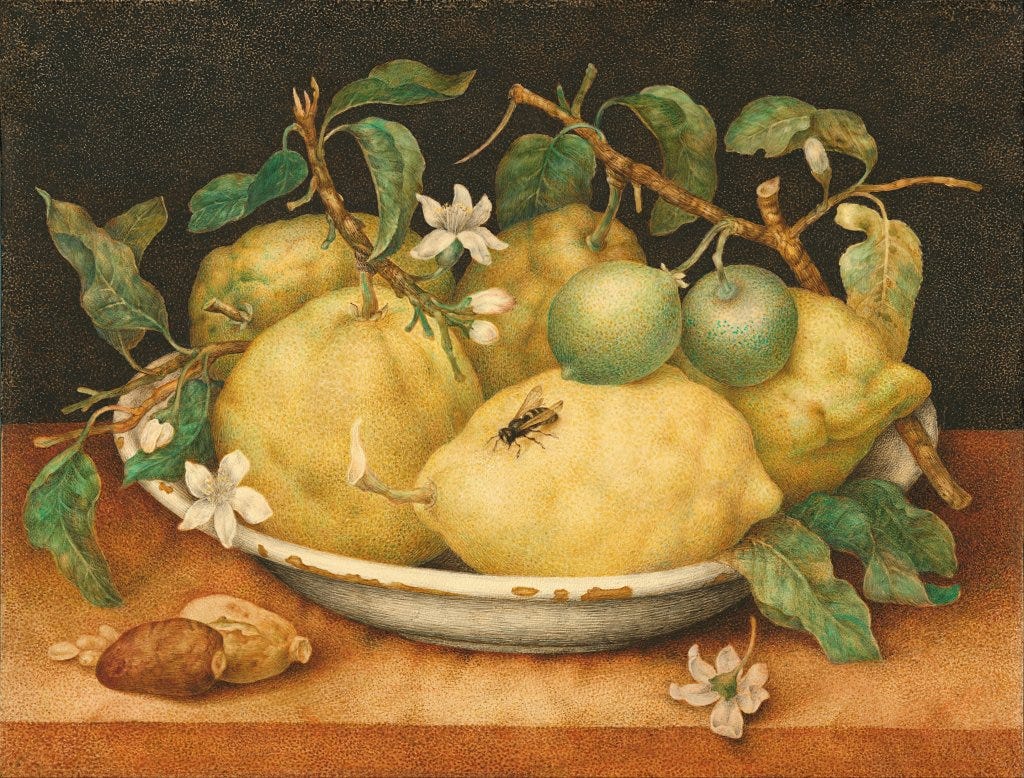
Look closely enough at any pronkstilleven and the warning signs reveal themselves one by one. A fly might be present, reminding you that decay had already begun the moment the fruit was picked. These details were never real accidents. Painters buried them in plain sight so that a wealthy viewer would eventually stop admiring the abundance and start counting the small failures hidden inside it.
That discovery was the entire point of the exercise. The pronkstilleven, was built to seduce the eye first and then punish it. A merchant who paid to have his wealth immortalized on canvas was also paying for a private confrontation with his own greed, since the same painting that flattered his success also reminded him that success rots. The effect worked because it let the viewer walk straight into the guilt on their own, discovering the memento mori only after they had already spent a moment enjoying the display of riches.
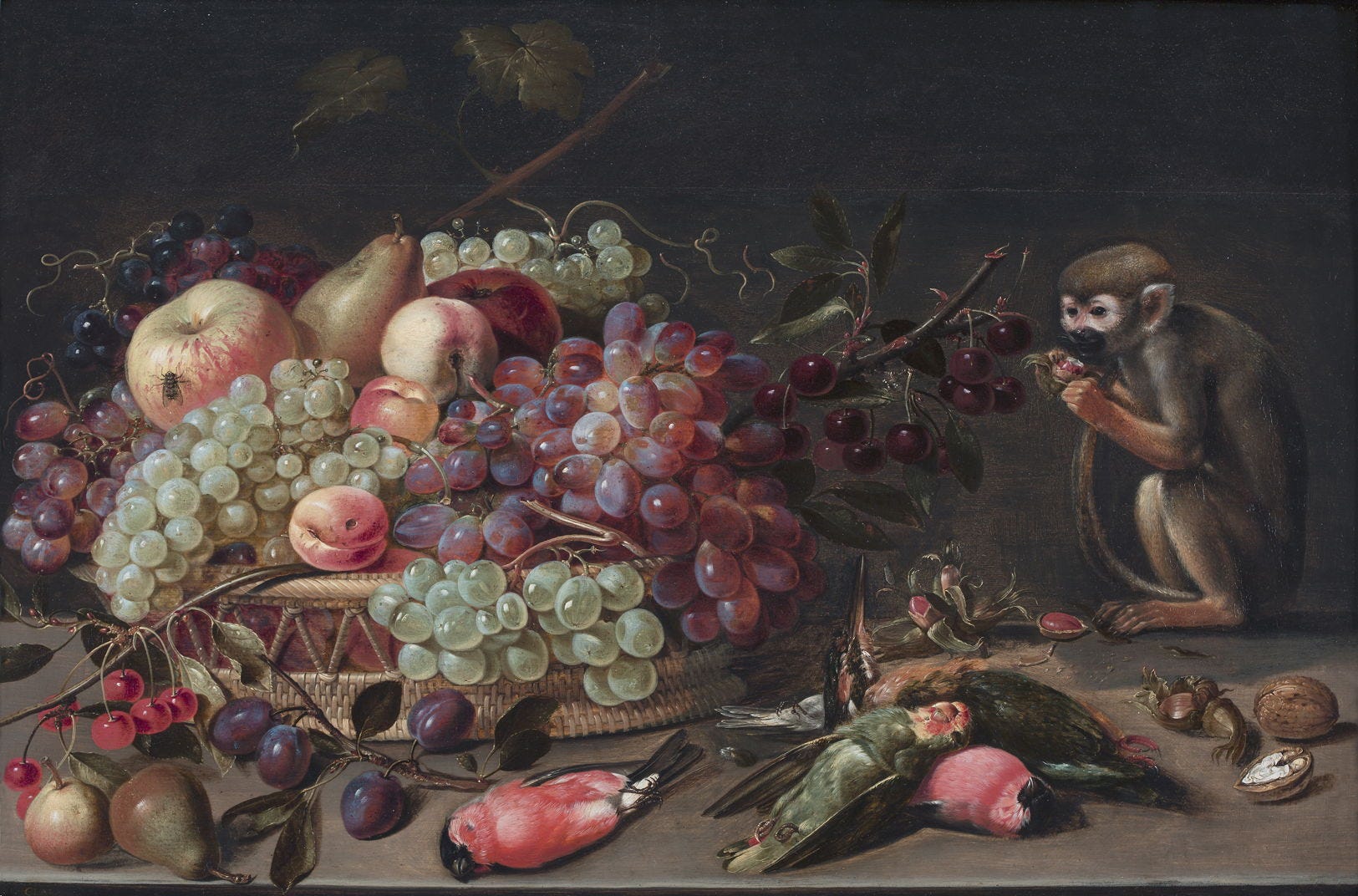
None of this worked without control, and the rotting grape is where that control becomes almost uncomfortable to look at. Rendering a grape so its skin looks thin enough to split, required a painter to study decomposition itself as closely as he studied light. That grape was never meant to look like it was actively losing its battle with time while the paint was still wet, proof that even the objects chosen for their beauty were already in the process of falling apart the moment they were captured.
The Grotesque Currency of the Dining Table
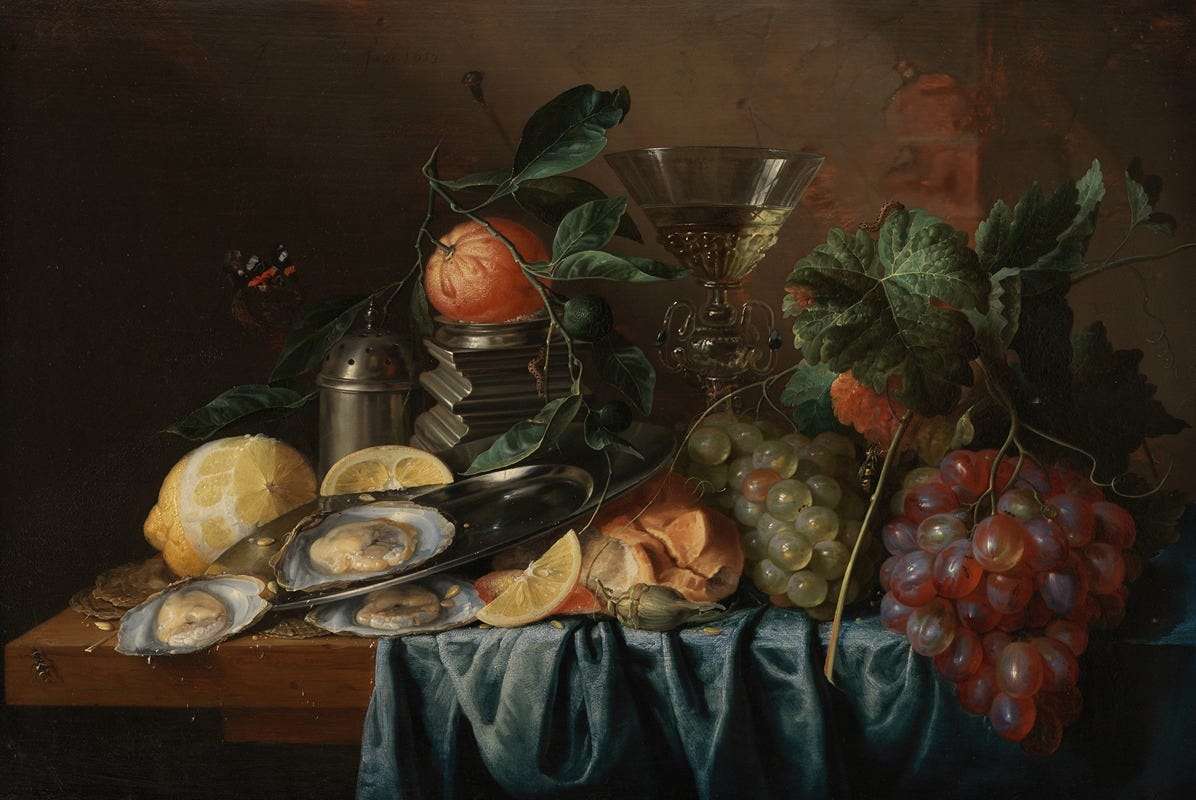
Oysters were tied openly to seduction, while lobsters had their own reputation for lust once eaten in quantity. Choosing these foods over a simple loaf of bread let the artist smuggle a warning about physical appetite into a painting that was ostensibly just celebrating a good meal. A viewer in 1650 would have understood immediately that the shellfish on the table was never only about hunger.
The painting then walks that viewer through the actual cost of indulging that hunger. A rose past its bloom drops petals onto the table in a way that looks almost violent up close. Wine spilled from an overturned glass spreads in a stain that will never lift from the cloth. These small ruins are right beside the feast, turning the same canvas of pleasure into a slow motion record of what pleasure leaves behind, which is a famine of the soul dressed up as spoiled linen and dying flowers.
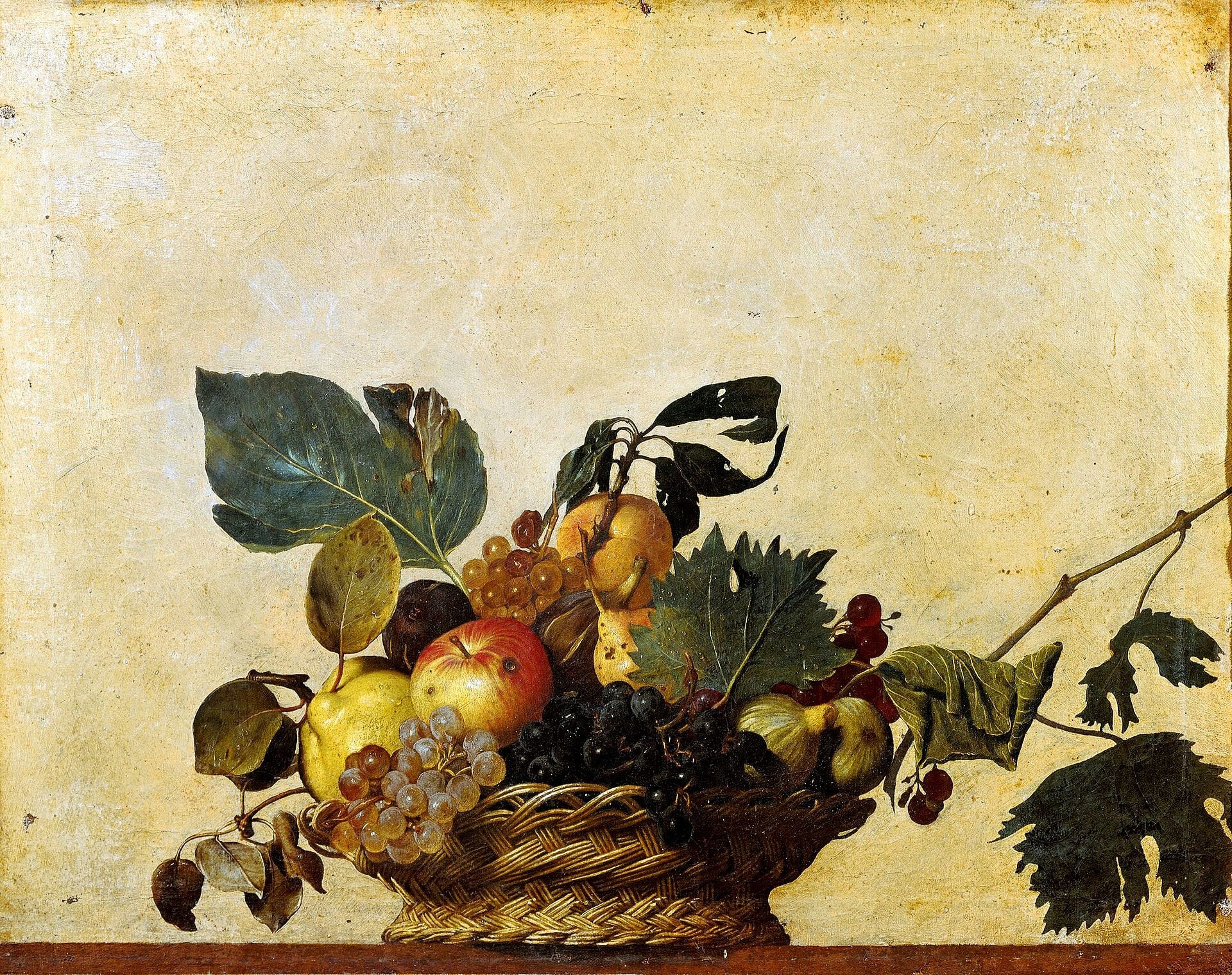
By the time a viewer had gotten all of it, the painting had done the work of a sermon without a single spoken word. It let the pleasure of taste right next to its consequence, insisting that a person who lived only for the palate was already walking the shortest road to the grave. That message was effective precisely because it was disguised as decoration, something a family could hang in a dining room and reckon with every time they sat down to eat.
Keeping stories like this accessible to everyone takes support from readers who believe history should not be gated. If you want to see more of this kind of work, consider backing Obscura directly.
The more we study art history, the more we realise that visual culture has always shaped perception. A curated image is never just a collection of objects … it is a language of symbols, choices and values.
WOW.