Gold Rush Grime
The Lonely Exploitation of Women in Frontier Mining Camps

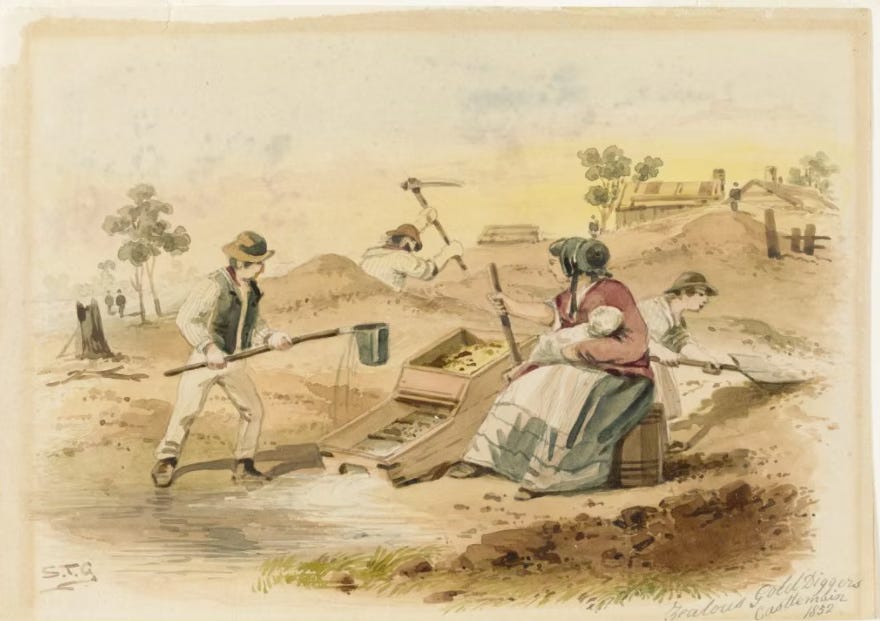
The American West was not won by sunbonneted women baking bread beside covered wagons. That image was polished by decades of Hollywood production, and is a useful fiction, one that flattens the grinding reality of what frontier life actually demanded from women. The true story is less romantic and far more instructive about how societies behave when legal structures collapse, when men are desperate, and when women arrive in places that were never designed to accommodate them.
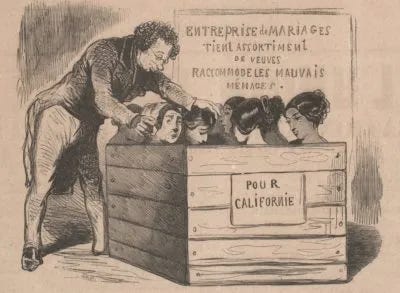
In California’s mining camps during 1849, men outnumbered women by ratios that historians estimate reached 100 to 1 in the most remote diggings. In San Francisco that same year, the census counted roughly 200 women among more than 25,000 residents. These were extraction zones, populated almost entirely by men who had left their wives and daughters behind, who lived in filth and danger, and who carried with them every frustration, and appetite that prolonged deprivation produces.
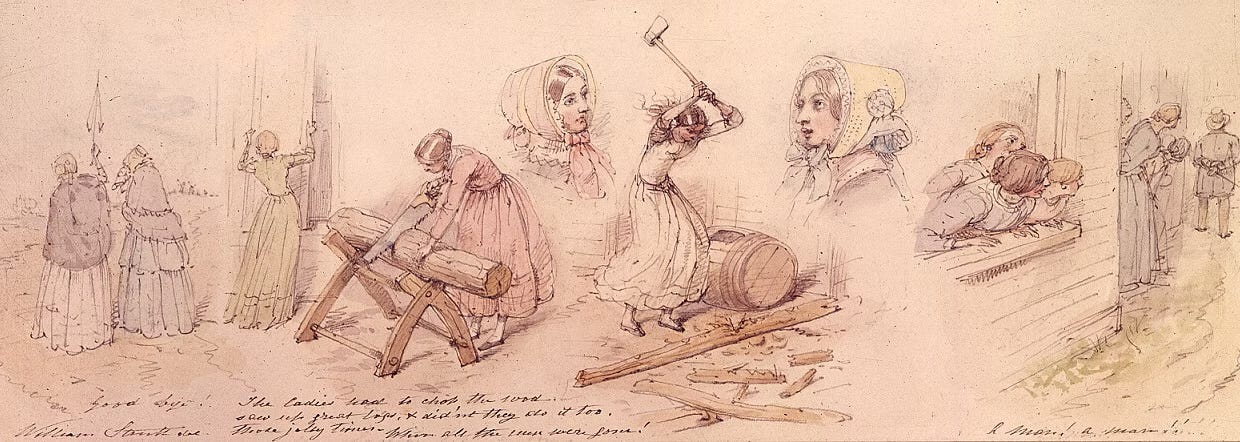
What followed was the commodification of female presence. A woman who could cook charged prices that would embarrass a fine restaurant today. A woman who could wash clothes earned more in a week than a miner could pan in a month. And women who sold sex, who made up the most visible and economically active female population in most camps, were key to how these settlements functioned, taxed by local governments, regulated informally by male consensus, and discarded when the gold ran thin. The female body became, in the most literal economic sense, the most reliably extractable resource in a space that was otherwise indifferent to human need.
Economics of the Mud and Canvas
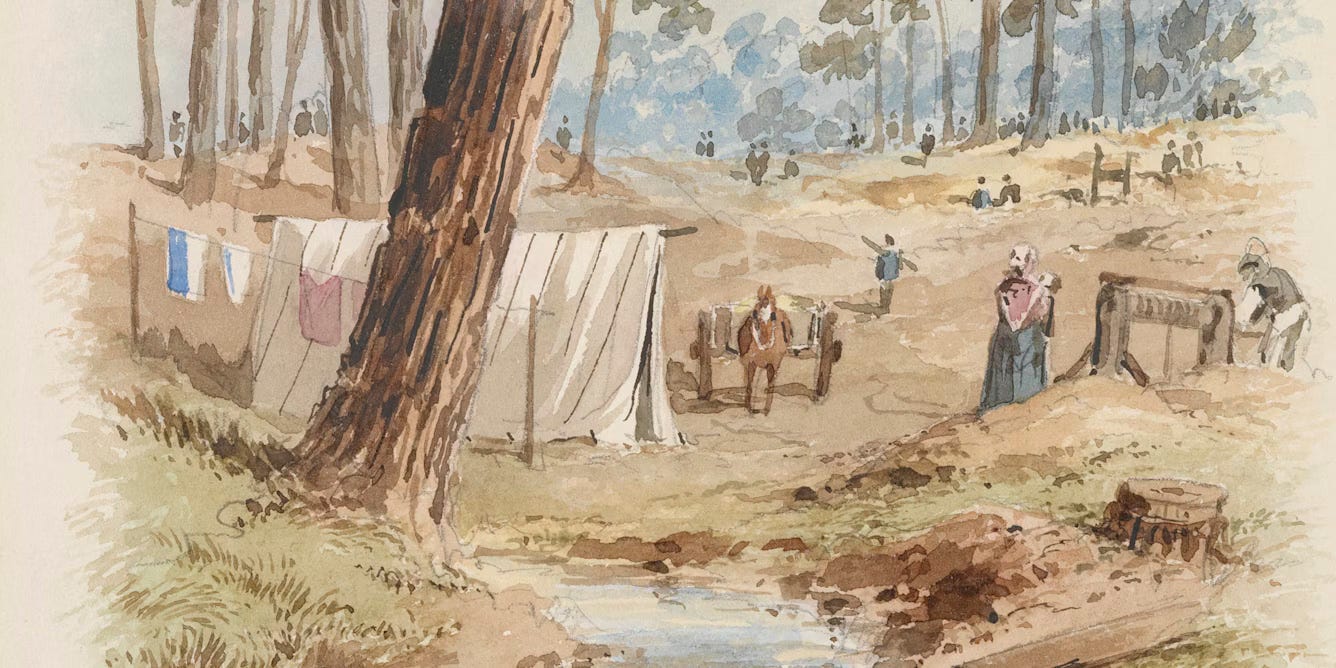
Before a single woman in a California mining camp sold her body, she sold her hands. The absence of legal infrastructure in the early diggings meant there were no wage protections, no property rights for women, and no courts that took female grievances seriously. What filled that vacuum was just market logic, and in that market, domestic skill commanded extraordinary prices precisely because so few people could provide it. A pie baked in a canvas tent sold for $10 in 1850, at a time when a laborer back east earned less than a dollar a day. A shirt laundered and pressed fetched prices that would seem absurd anywhere else on the continent. Women who arrived with nothing but the ability to cook, clean, and sew found themselves, briefly, holding real economic power in a world that otherwise assigned them none.
The physical cost of that power was severe and largely invisible in the historical record. Laundry work in the camps meant hauling water from rivers contaminated with mining runoff, boiling loads over open fires in summer heat, and scrubbing fabric against washboards until fingers cracked and bled. Women who took in washing routinely developed chronic joint damage, respiratory illness from wood smoke, and skin conditions from the lye soap they used in industrial quantities. Cooking over open flames in makeshift structures meant burns, smoke inhalation, and working 14-hour days with no seasonal reprieve.
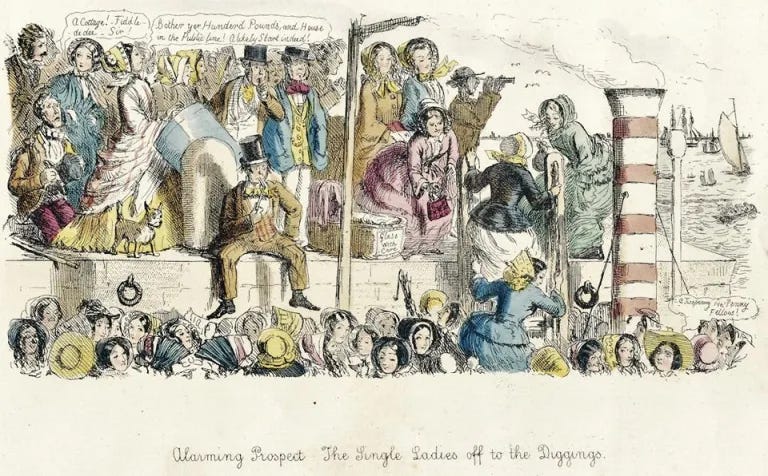
The inflation that made domestic labor briefly profitable also made survival mathematically brutal. Flour cost $800 a barrel during peak scarcity. Rent for a canvas partition in a shared tent could consume a week’s earnings overnight. Women who arrived intending to support themselves through cooking or laundry often discovered that the arithmetic simply did not hold, that their labor generated income and that income evaporated before it could accumulate. The slide into sex work was usually a slow numerical reckoning, a woman calculating what she could and could not afford to refuse. The “soiled dove” hierarchy that historians document, with its rankings from dance hall girls to crib workers, was an economic one, mapping exactly how far a woman had traveled from solvency.
Violence in the Lawless Landscape
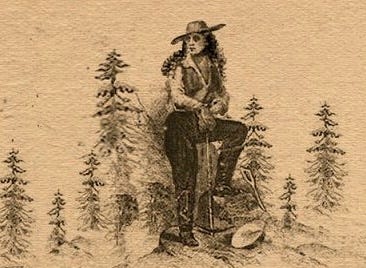
The mining camps of the American West were places where law had been deliberately outpaced by greed, and where men arrived faster than any governing structure could follow. For women, this meant living inside a jurisdiction where their bodies had no meaningful legal standing. Assault against a prostitute or a dance hall worker was rarely prosecuted, because community consensus did not classify what happened to these women as a crime worth pursuing.
“Frontier fever” was a term applied loosely to the unraveling that affected both men and women in isolated camps, but the conditions producing it were not equivalent. Men who broke could leave. They could abandon a claim, join another party, and move. Women embedded in debt-bondage systems, without resources or safe passage, were immobile. The despair documented was a rational response to a situation with no visible exit.
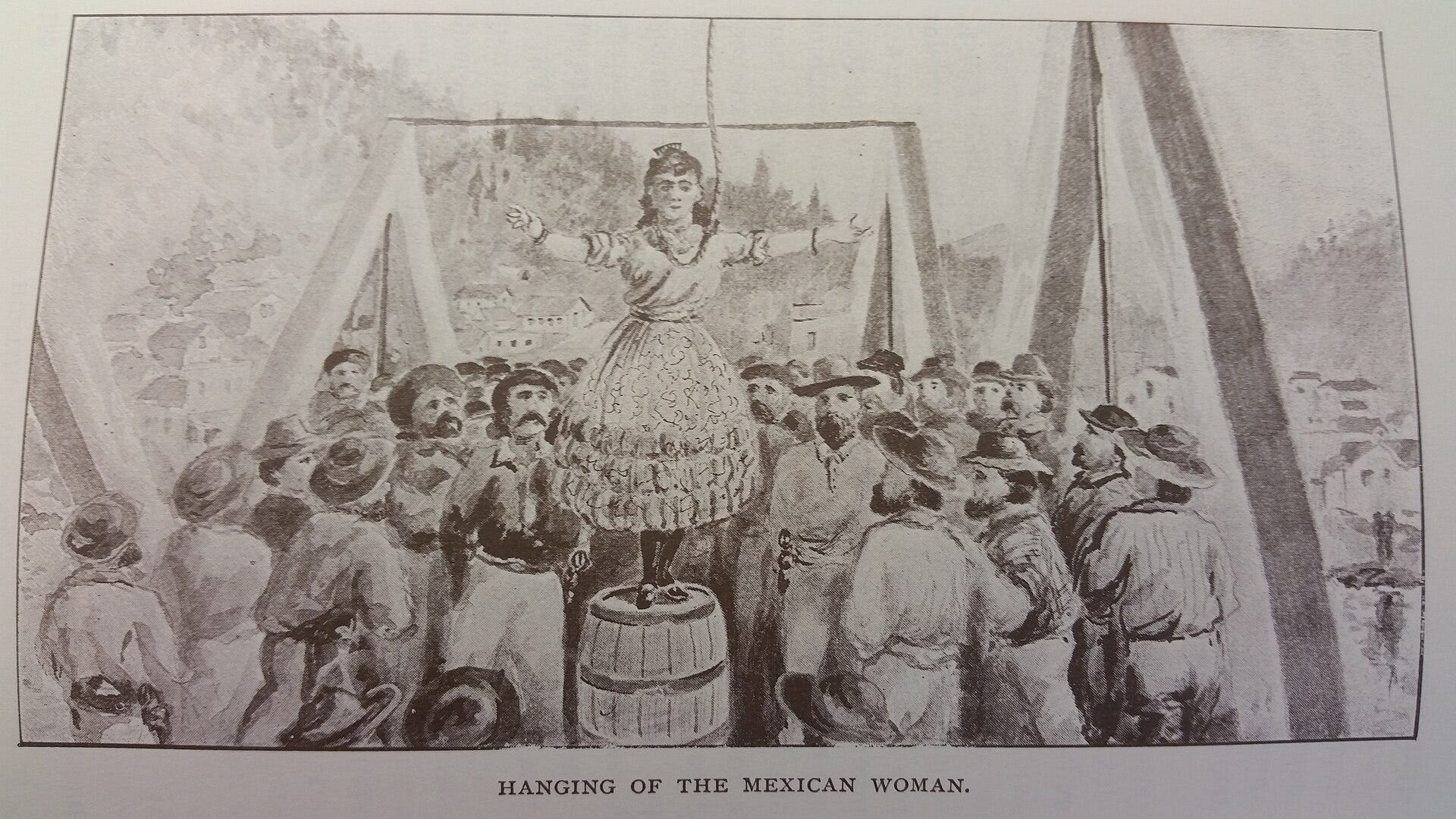
What made the violence and the grief so durable was the community’s active investment in not seeing it. Mining camp culture required women to be available and required them to be invisible at the same time, present as a service and absent as a person with needs, and limits. The men who used dance halls and cribs on Saturday night sat in the same camps on Sunday morning organizing church committees and debating civic improvements. This was s a psychological arrangement that kept exploitation running smoothly by never formally acknowledging that exploitation was what it was.
If this deep dive was worth your time, consider making the next one possible. Your support is what fuels the research.
Thanks for this post - it’s both fascinating and saddening. I would argue that the US is currently a place where “the law is deliberately outpaced by greed.”
This topic is something I've not really thought about. A 'made in New Zealand' movie about a woman during our gold rush times in the South Island, portrayed much of what your article is saying. It's title is 'The Stolen'. They were grim times, for sure.