Gods Don't Bleed
How Ancient Myth Accidentally Invented the Modern Antihero

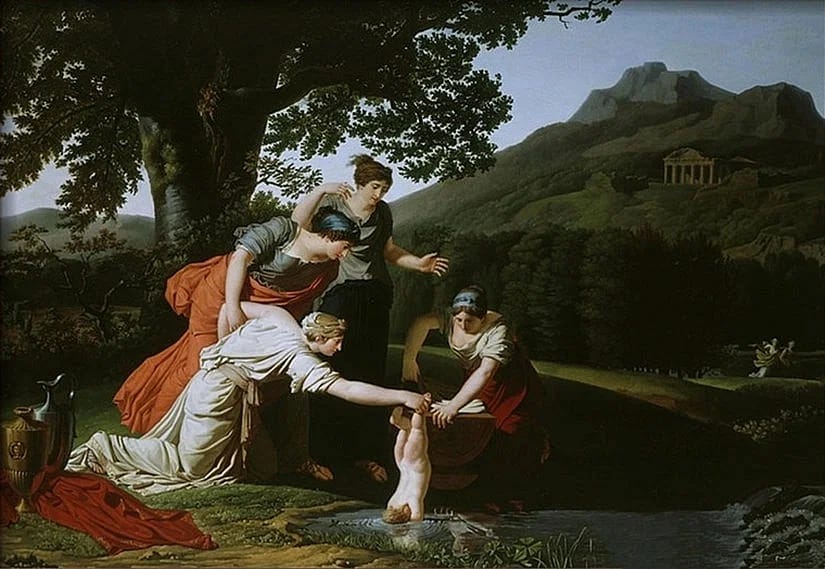
Before comic books gave us caped gods and before Hollywood perfected the invincible action hero, ancient Greece handed the world Achilles, and with him, the original blueprint for what it means to be almost untouchable. His mother Thetis dipped him into the River Styx to seal his body against death, coating him in divine protection so complete that no mortal force could reach him. The Greeks understood that a hero without limits is not a hero at all, he is simply a god wearing a costume. So they left one inch of skin unwashed, one heel exposed, and in doing so, built the foundational architecture for every superhero story that would follow for the next three thousand years.
What makes the image of Achilles so intriguing is the conformation of it. Imagine a body sculpted to physical perfection, capable of outrunning horses and dismantling armies, and then locate the single square inch on which his entire existence balances. That proportion alone is staggering. The vulnerability is a patch of ordinary skin at the base of his foot. This placement told ancient audiences something about the nature of greatness, that what keeps a legend tethered to mortality is almost always something small, and something no one thinks to guard.
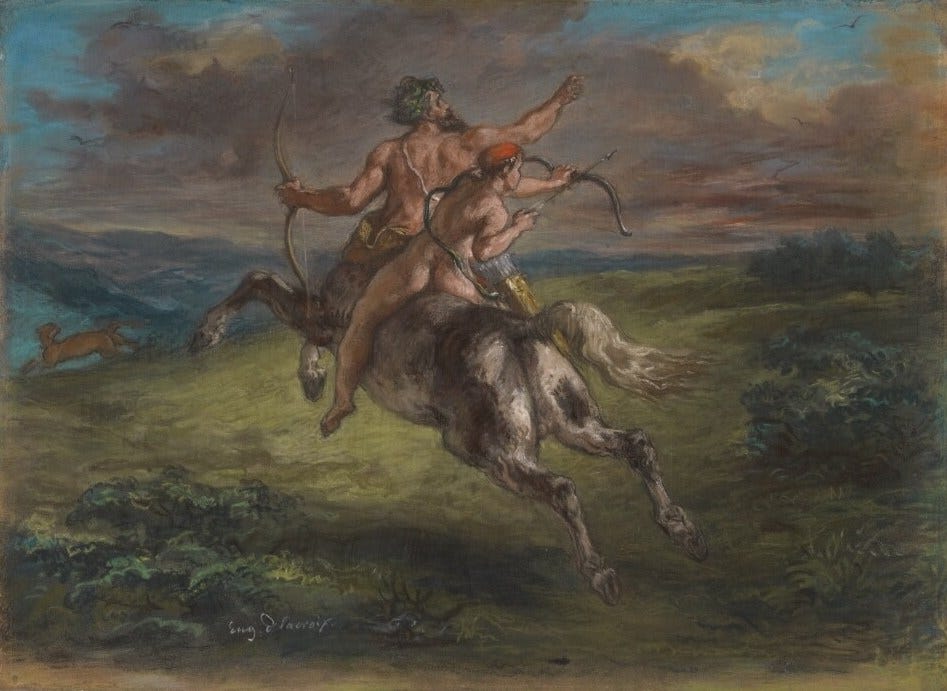
The deeper purpose of that exposed heel is that it was as a theological bridge. Without it, Achilles belongs entirely to the divine and ultimately uninteresting as a human story. The flaw is what pulls him back across the line into a world where audiences could grieve for him and possibly see themselves in him. This is the what that myth understood long before psychology named it: people do not connect with perfection, they connect with the precise place where perfection fails. The heel was the entry point through which the human experience could enter a story that would otherwise float away into abstraction.
The Anatomy of a Fracture
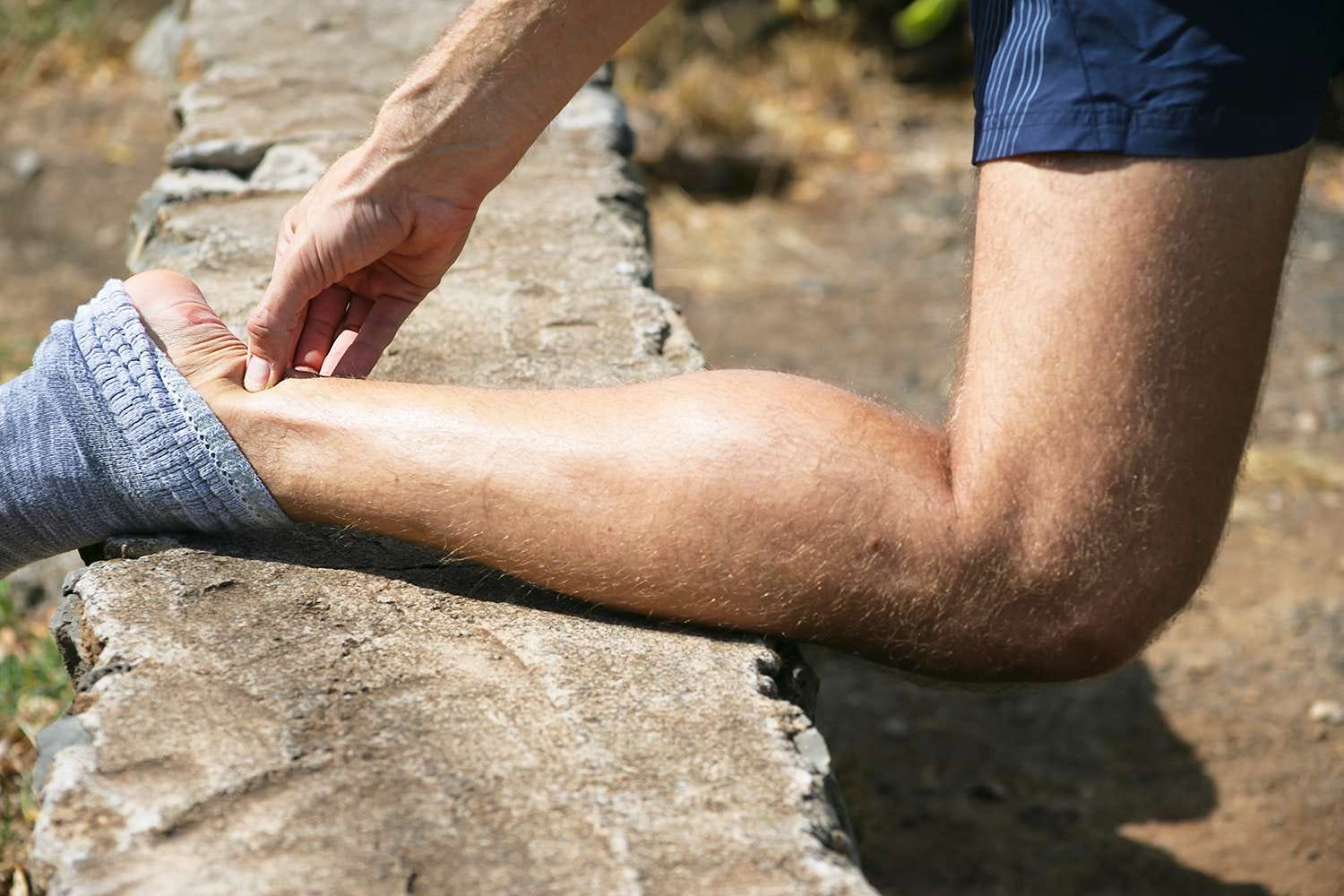
The calcaneal tendon, what medicine now calls the Achilles tendon, is the thickest and strongest tendon in the human body. It connects the calf muscles to the heel bone and bears the full load of every step and pivot a person makes. Without it, forward motion collapses entirely. A person with a severed Achilles tendon cannot walk and cannot push off the ground with any force. The ancient Greeks did not have anatomy textbooks, yet they chose this precise structure as the site of the greatest warrior’s death. That choice reveals something remarkable about how deeply human bodies were observed and understood in the ancient world. They knew, without clinical language, that the heel was the engine of a warrior’s power, and that removing it from the equation removed the warrior entirely.
When Paris’s arrow lands in that tendon, the moment is a demotion. Everything Achilles represented collapsed into a single point of biological failure. The arrow ends the era of the warrior who moved through the world as though physics applied to everyone around him and not to him. What falls at Troy is the entire idea that a person can be built beyond the reach of ordinary destruction, and the fall happens through one well-aimed shot at the bottom of a foot.
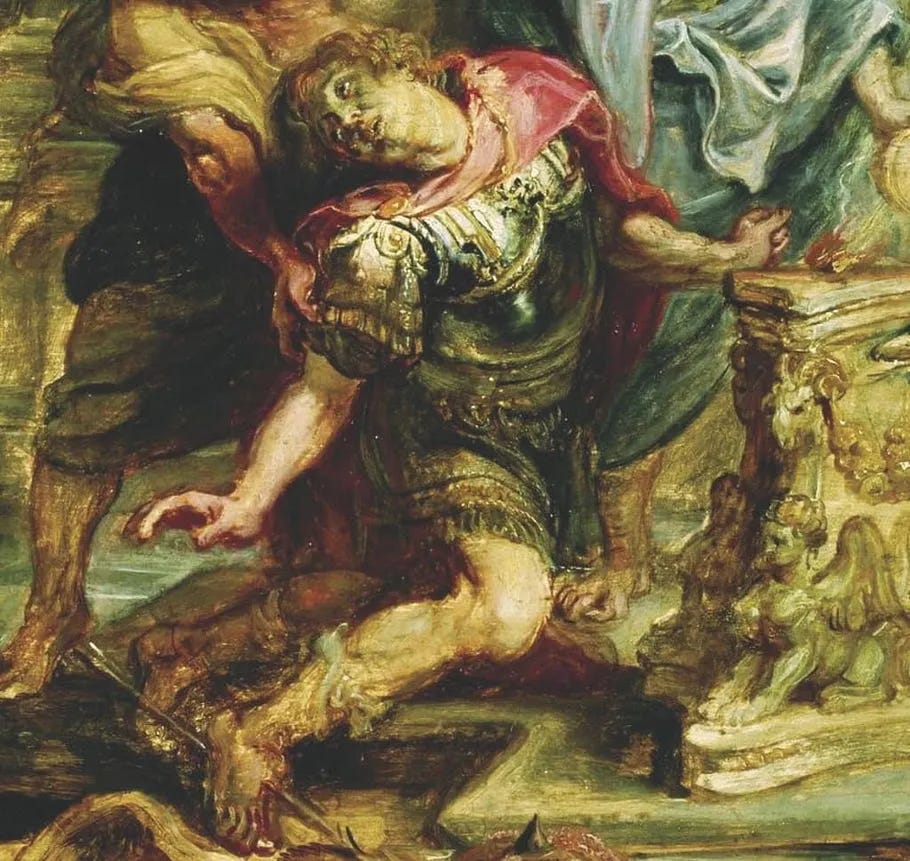
The Greeks rooted this story in the earth deliberately. Olympian gods floated above consequence, untouched by gravity in every sense of the word. Achilles was always caught between those two registers, and the heel was the anatomical proof of which register ultimately claimed him. The tendon is a grounding structure in the most literal sense. It is the tissue that keeps the body in contact with the ground, that transfers force downward and propels movement forward. To destroy it is to end a person’s relationship with forward motion altogether. In choosing this particular piece of flesh as the site of mortality, the myth argued that no matter how far a person ascends toward the divine, the body’s connection to the earth is the one thing that cannot be consecrated away.
The Birth of the Mortal Archetype
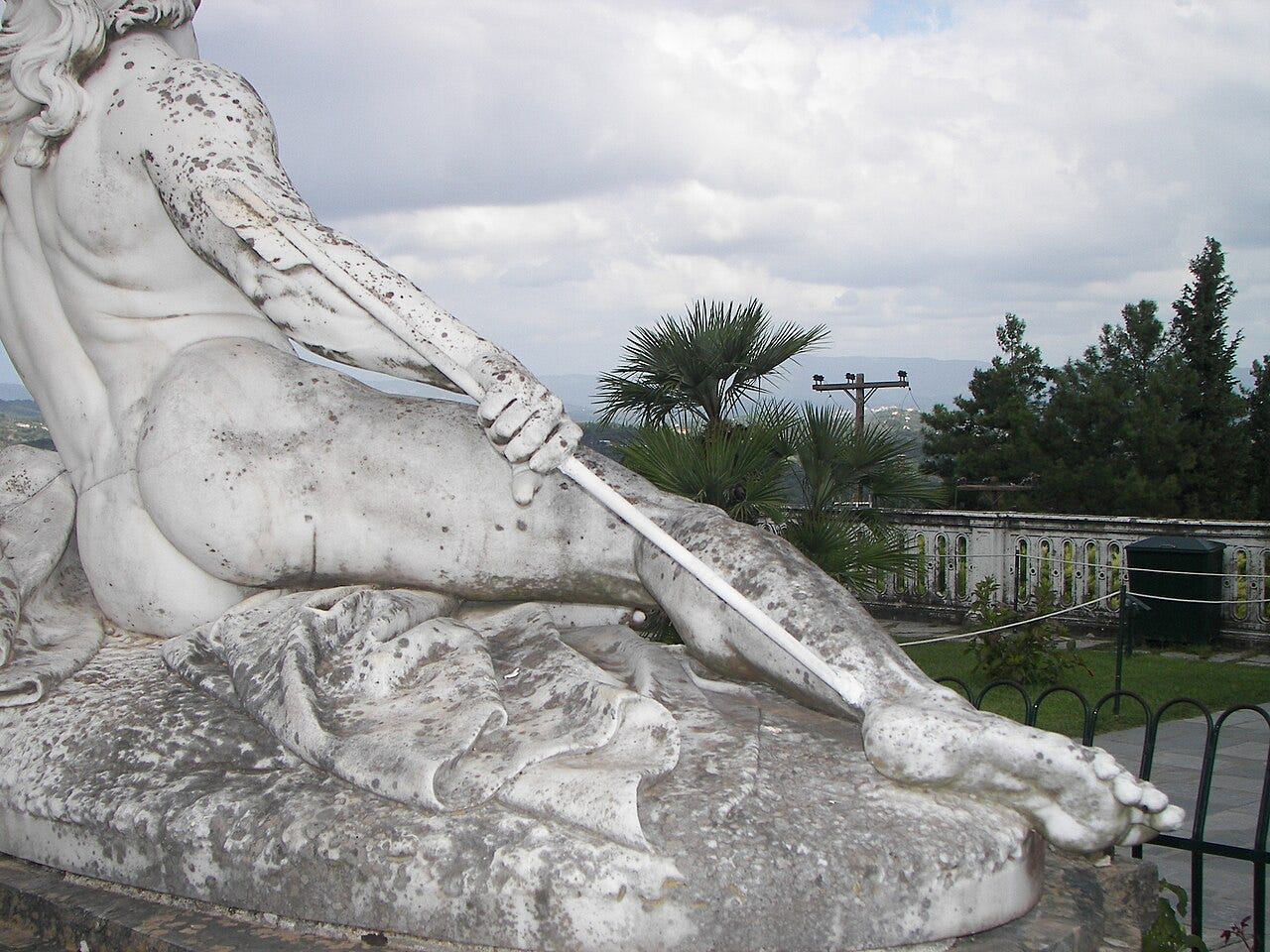
The phrase “Achilles’ heel” did not enter the English language until the early nineteenth century, roughly two and a half millennia after the myth itself was born. For thousands of years, the story circulated as legend and it took that long for the culture to abstract the wound into a concept portable enough to attach to any person or any system with a hidden point of failure. Today the phrase is in boardrooms, medical journals, sports commentary, and geopolitical analysis. The myth produced a diagnostic tool for understanding how strength and fatal weakness can occupy the same body at the same time.
Modern storytelling has absorbed this lesson so completely that audiences now expect their heroes to arrive pre-fractured. Tony Stark’s chest cavity houses a device keeping shrapnel from his heart. Walter White’s pride destroys everything his intelligence builds. Frodo carries the Ring toward the one place it can destroy him, and his greatest threat is the pull of his own desire. These are structural details added to make characters more interesting. Writers and filmmakers understand that a character’s limitation is the reason for audience investment, because a person watching a story does not see themselves in the hero’s power. They see themselves in the hero’s exposure. The wound is the point of entry, and without it, there is no emotional way into the story at all.
What this represents, across centuries of storytelling, is a shift in what audiences ask of their heroes. Antiquity built figures to be worshipped from a distance, larger than life, mythologically sealed. The modern appetite runs in a different direction entirely. Readers and viewers now root hardest for characters assembled from genuine limitation, people who carry visible damage and keep moving anyway. The Achilles myth planted the original seed of this understanding by insisting that the most powerful warrior in the ancient world could be undone by one square inch of unprotected skin. Every story told since then about a flawed hero trying to hold the world together is drawing, whether consciously or not, from that same well.
You made it to the end that means this piece found its person. If you are that person, become the reason the next one finds it just as easily and just as freely.
Excelent post!