Frozen in Ash
The Petrified Last Moments of Pompeii’s Forgotten Slaves

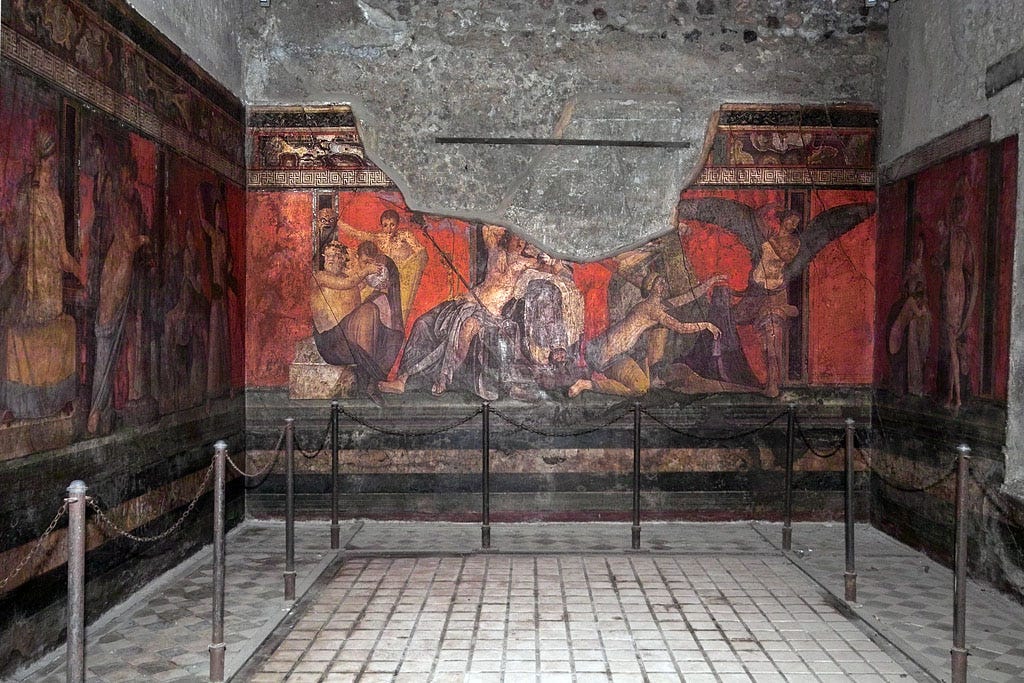
Walk through any reconstruction of ancient Pompeii and the eye is drawn immediately to the obvious: the frescoed walls, the mosaic floors, and the grand atriums of the merchant class. But the city that actually functioned, that ground grain and hauled water and kept the bakeries warm before dawn, was built on the labor of an estimated 30,000 slaves who made up roughly a third of Pompeii’s population. They are harder to find in the historical record precisely because their lives were considered unremarkable by those doing the recording but archaeology is slowly correcting that.
Behind the painted walls of villas like the House of the Vettii or the Villa of the Mysteries lay a completely different architecture. Narrow service corridors, low-ceilinged storage rooms, and ergastula, which were essentially indoor holding pens for slaves considered escape risks, occupied the unglamorous rear sections of estates that tourists admire from the front. These spaces had no windows, minimal ventilation, and left skeletal evidence of chronic physical (stress compressed vertebrae, worn-down joints, and healed fractures consistent with repetitive heavy labor). The people confined to these rooms were the operating system to Pompeian life, invisible by social design and now only visible because a volcano had no interest in hierarchy.
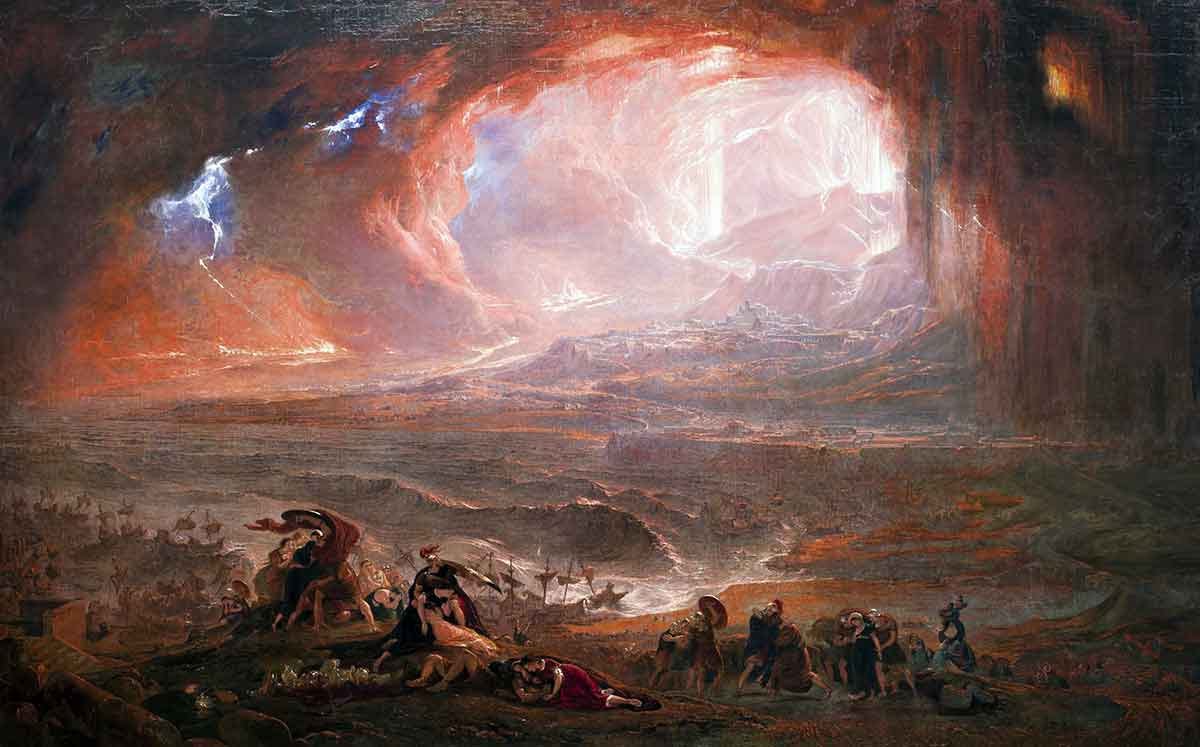
When Vesuvius began its preliminary tremors on the morning of August 24th, 79 AD, the city did not empty uniformly. Wealthy families deliberated, packed valuables, and issued instructions. Slaves, for the most part, stayed. Some were physically chained, a fact confirmed by excavated remains found still shackled in collapsed rooms. Others stayed because leaving without permission carried a death sentence under Roman law, and because the social architecture of bondage had made the concept of self-preservation secondary to the demands of the household. That calculus, the decision to remain not out of loyalty but out of a system that had stripped away the right to choose otherwise, is perhaps the most haunting detail the ash preserved. The volcano froze not just bodies but the precise moment when an entire class of people had no good options.
The Anatomy of a Plaster Void
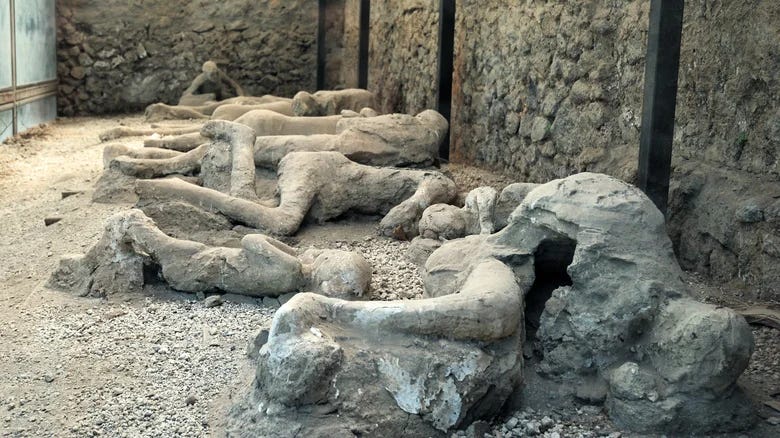
In 1863, Giuseppe Fiorelli made an observation that changed what archaeology could do with absence. The compacted ash that buried Pompeii had hardened around organic matter, and as bodies decomposed over centuries, they left behind precise hollow cavities in the rock. Fiorelli began injecting liquid plaster into those voids, and what emerged were exact physical records of the final seconds of a human life. Every clenched finger, every turned head, every instinctive curl of a body trying to protect itself from unbearable heat was captured with a fidelity that no artist could have manufactured. The technique has since been refined using transparent resin and CT scanning, which now allows researchers to examine bones suspended inside the cast without destroying the outer form. What Fiorelli understood intuitively was that the ash had been doing archaeology long before archaeologists arrived.
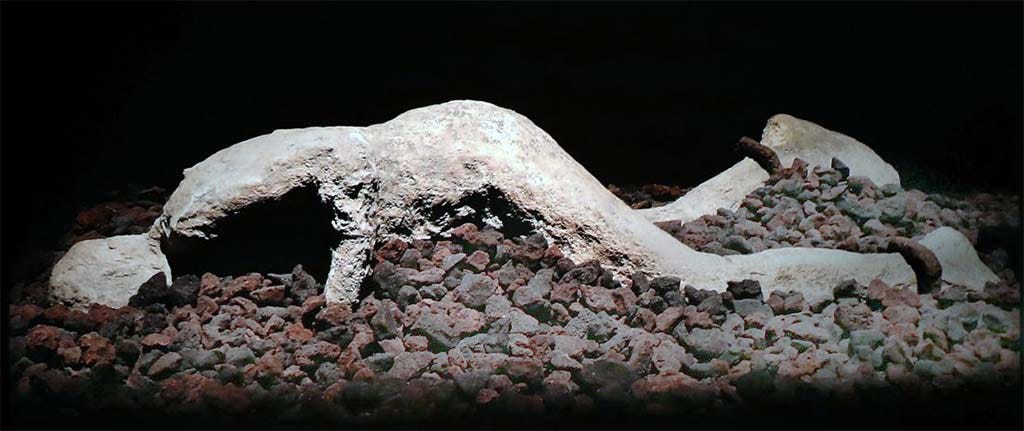
The casts recovered from slave quarters and ergastula carry a specific physical grammar that forensic anthropologists have spent years decoding. Many bodies were found in the pugilistic posture, limbs drawn inward and muscles contracted, which is a heat response, not a fighting one. But among the enslaved, additional details compound the story. Several casts show wrists positioned in ways consistent with bound restraints, and the skeletal remains inside confirm ligature marks on bone where soft tissue once held iron. Some individuals died face-down in positions suggesting they had been crawling, possibly toward a wall or door. The body records what the mind intended in its last moments, and those intentions, scratching toward an exit that was either locked or simply too far, are written into the plaster as clearly as any text.
The iron itself has survived better than almost everything else. Excavations across Pompeii have produced shackles, leg irons, and slave collars with the rings still intact, some still attached to the skeletal remains of the people who wore them. One of the most documented discoveries came from a property near the Via dell’Abbondanza, where a group of individuals were found with iron fetter fragments near their ankles in a room with no external exit. Roman law required that slaves be identifiable if they ran, and collars were sometimes engraved with instructions to return the wearer to their owner if found wandering. The volcanic record stripped that legal architecture down to its bones, literally, and what it reveals is a system so thorough in its control that it remained operative even as the sky turned black.
The Hierarchies of Survival and Death
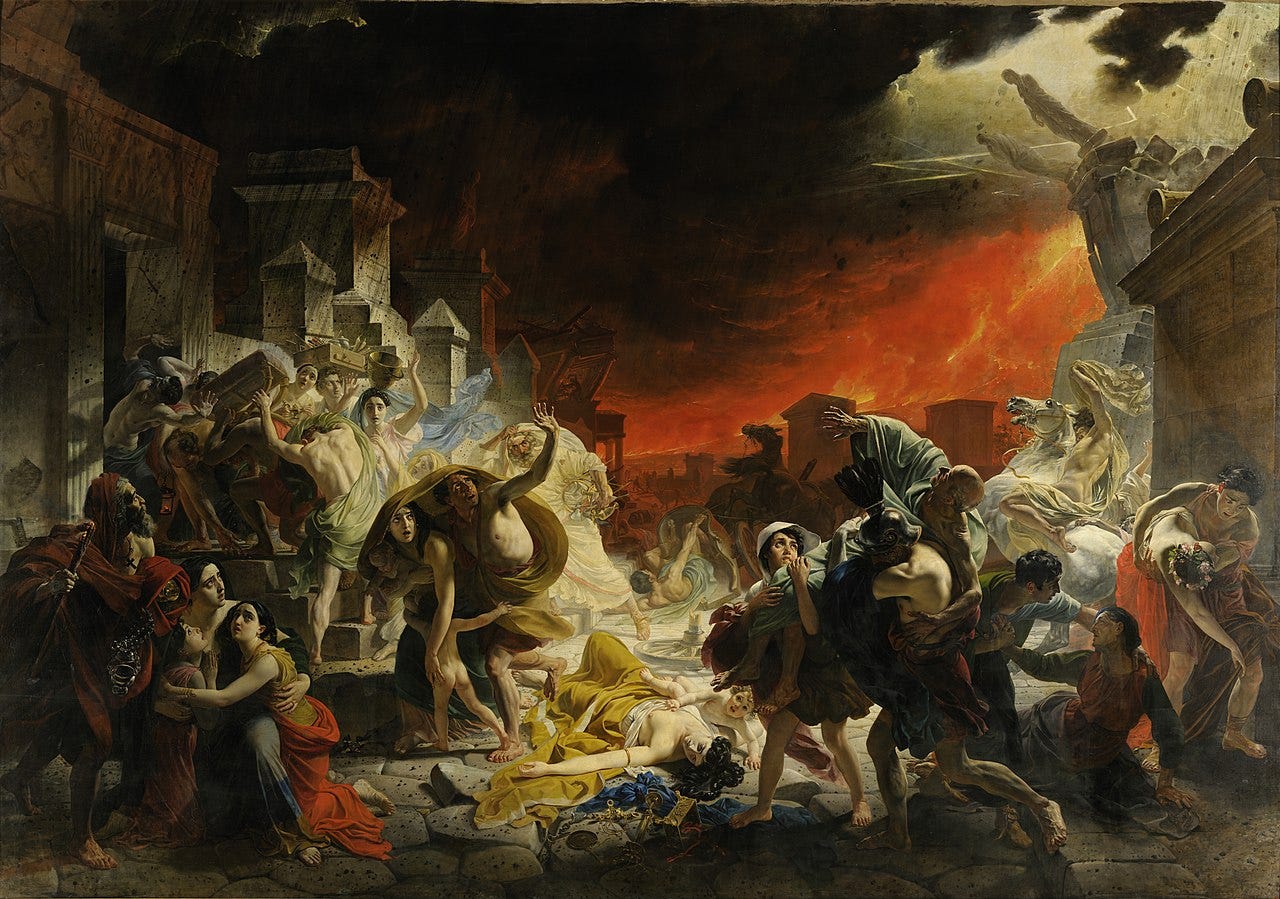
Pompeii did not kill everyone equally, and the eruption’s timeline makes that uncomfortably clear. In the first hours, as pumice rained down and the air thickened, those with means, carts, connections, and the legal right to simply walk out, used all of it. Wealthy families moved toward the coast or inland roads. They had sandals made for long distances, access to horses, and social networks in nearby towns that could absorb them. The workers locked into the city’s industrial operations had none of that. Excavations of Pompeii’s bakeries, fulleries, and thermopolia have consistently turned up skeletal remains near work stations, near millstones still loaded with grain, near the stone counters of shops that someone apparently felt responsible for maintaining until the last possible moment.
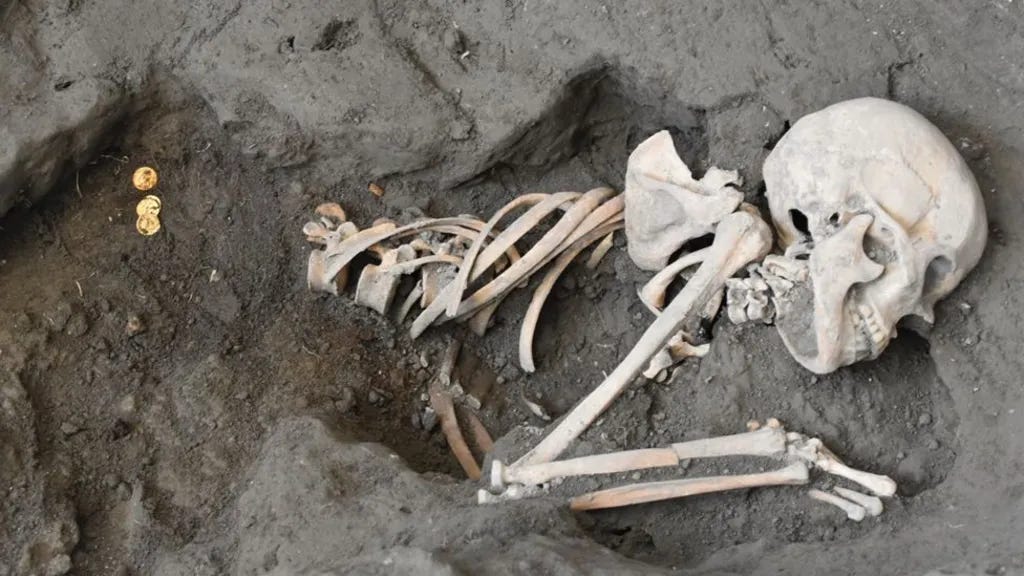
The House of Menander, one of Pompeii’s most extensively excavated properties, produced a find that crystallizes this dynamic with painful specificity. In a service area of the house, archaeologists discovered skeletal remains accompanied by a wooden box containing the family’s finest silverware, 118 pieces of it, carefully wrapped. The leading interpretation is that a slave or low-status servant had been tasked with securing the valuables, likely by household members who fled with the intention of returning. That person stayed with the silver while the eruption progressed through its deadliest phases. Whether they were ordered to guard it, feared punishment for abandoning it, or simply had nowhere else to go is a question the archaeology cannot fully answer. But the physical fact remains: someone died in that room, next to someone else’s property, doing someone else’s job.
History has spent centuries deciding whose stories were worth telling. This work exists to push back on that. If you believe the forgotten deserve the same shelf space as the celebrated, support this writing and help keep it accessible to every reader, regardless of what they can afford.