Choreographed Chaos
The Psychological Fracture That Forced a City to Dance to Death

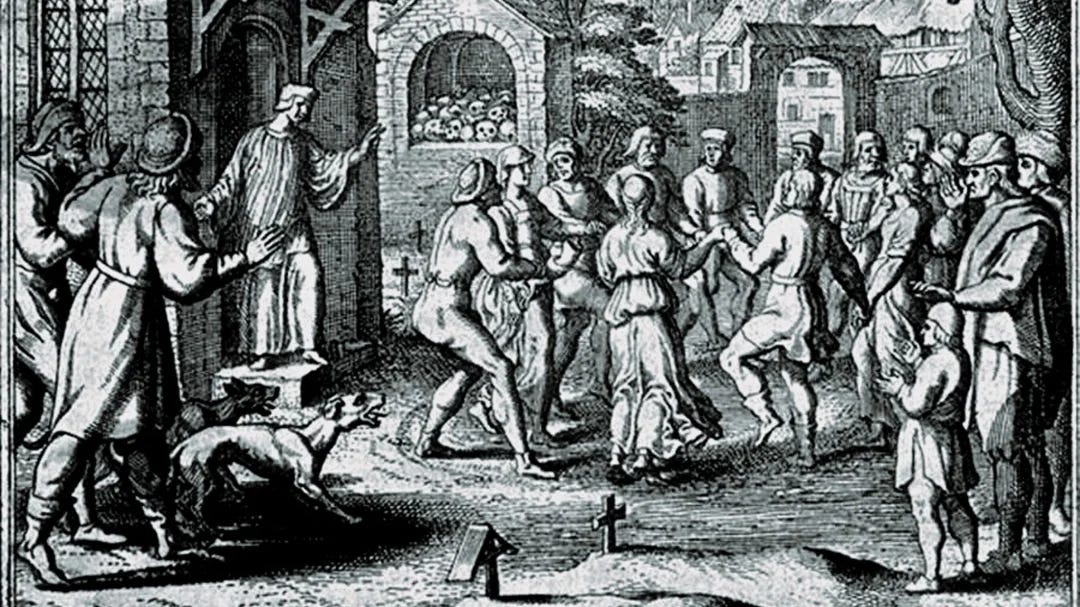
In July 1518, a woman named Frau Troffea walked into the streets of Strasbourg and began to dance. There was no music playing, neither was there any celebration underway. She danced alone, her feet scraping the stone in a rhythm only she could hear. By the end of the first day, she had not stopped. Even after the week ended, she still had not stopped. Her feet bled through her shoes. Her body had long exhausted its reserves of food and sleep, and still she danced. What makes this moment so unsettling is the total absence of joy in it. This was a woman trapped inside her own body, performing an act she had no control over.
Within days, others joined her, because they too could not stop themselves. The dancing spread the way a rumor spreads in a community already wound tight with fear. Strasbourg in 1518 was a city suffocating under famine, disease, and social despair. The people living there were human beings pushed to the edge of what the nervous system can hold, and Frau Troffea’s dancing gave their breaking point a direction. Mass psychogenic illness, as modern researchers call it, does not need a toxin. It needs a population that is already primed to snap, and one person willing to go first.
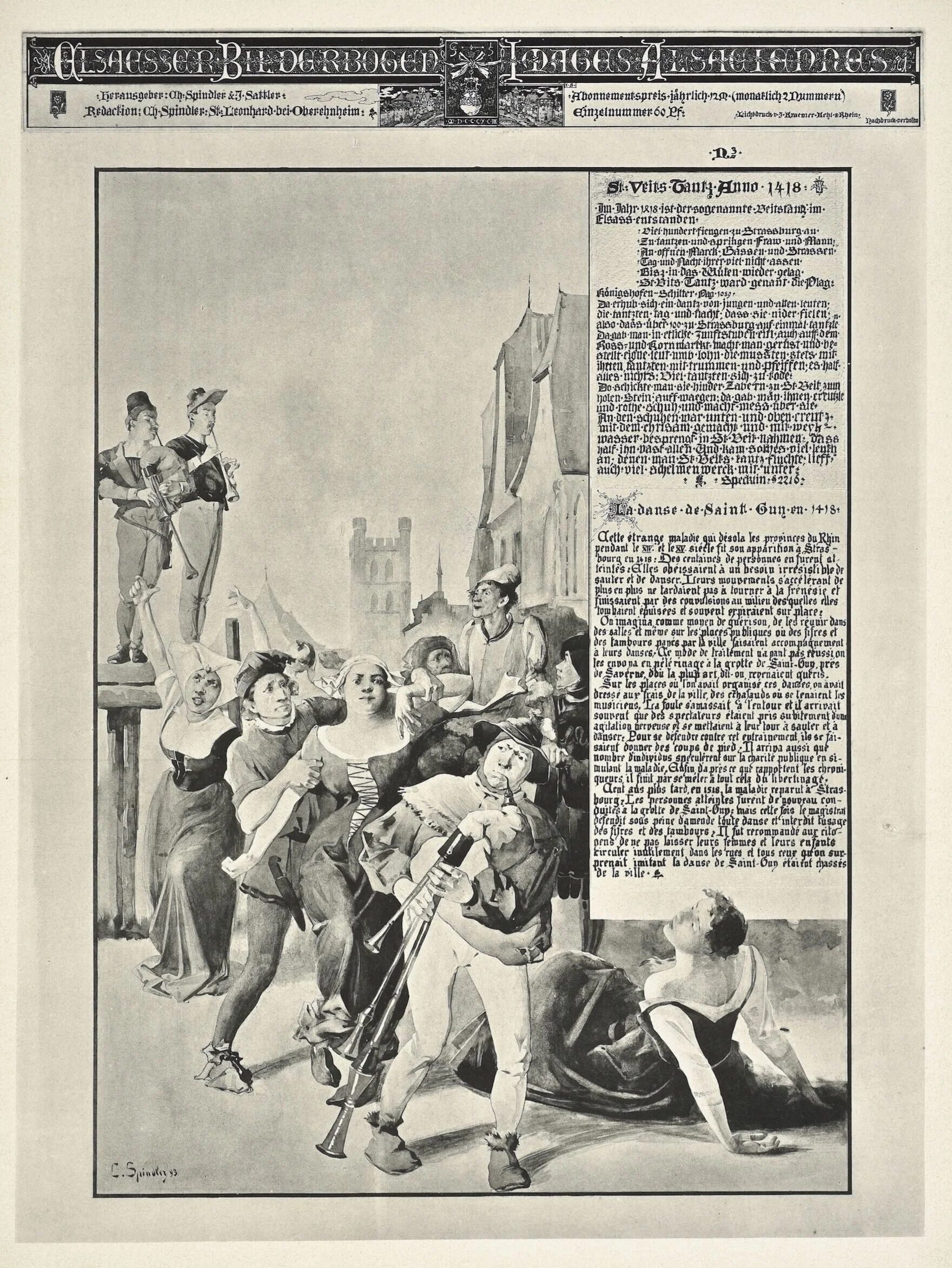
City authorities, desperately trying to make sense of what they were watching, initially prescribed more dancing. They hired musicians and built a stage, operating on the medieval belief that the cure for compulsive movement was to let it burn itself out. That decision turned a disturbing incident into a death sentence for dozens of people who collapsed from exhaustion, heart failure, and stroke. The horror embedded in this history is the reminder that institutional responses to psychological crisis, when stripped of genuine understanding, can accelerate the very destruction they are trying to contain. Strasbourg failed because it tried to manage something it fundamentally did not understand, and that gap between observation and comprehension cost people their lives.
The Biological Trigger of the Grain
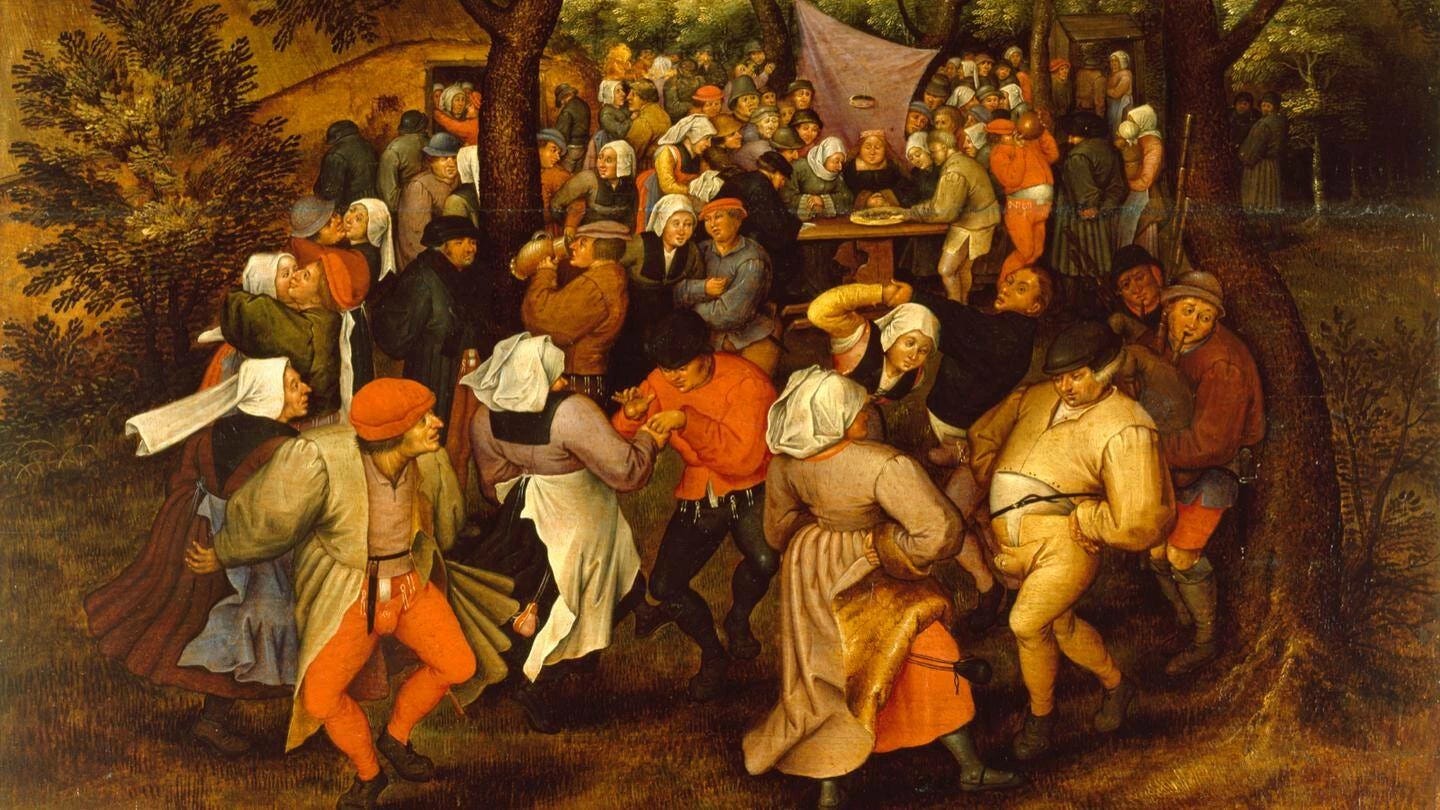
One of the most credible scientific explanations for the dancing plague points directly at the bread. Ergot, a fungus that colonizes rye crops during wet, cold growing seasons, produces alkaloids that behave in the human body with shocking similarity to lysergic acid diethylamide, what we now know as LSD. The summer preceding the 1518 outbreak had been particularly damp, and Strasbourg’s poor were surviving almost entirely on rye-based bread because it was the cheapest and most accessible food available. When ergot-contaminated grain was milled and baked, the toxins survived the process and entered the bloodstream of every person eating from that supply.
Ergotism in its convulsive form produces involuntary muscle contractions, burning sensations in the limbs, and visual and auditory hallucinations vivid enough to completely override rational thought. A person in the grip of ergot poisoning does not experience their body as their own. Researchers who have studied the 1518 case, including historian John Waller, note that the neurological profile of ergotism aligns closely with eyewitness descriptions of the dancers, particularly the reports of people appearing frantic, glassy-eyed, and completely unreachable by those around them.
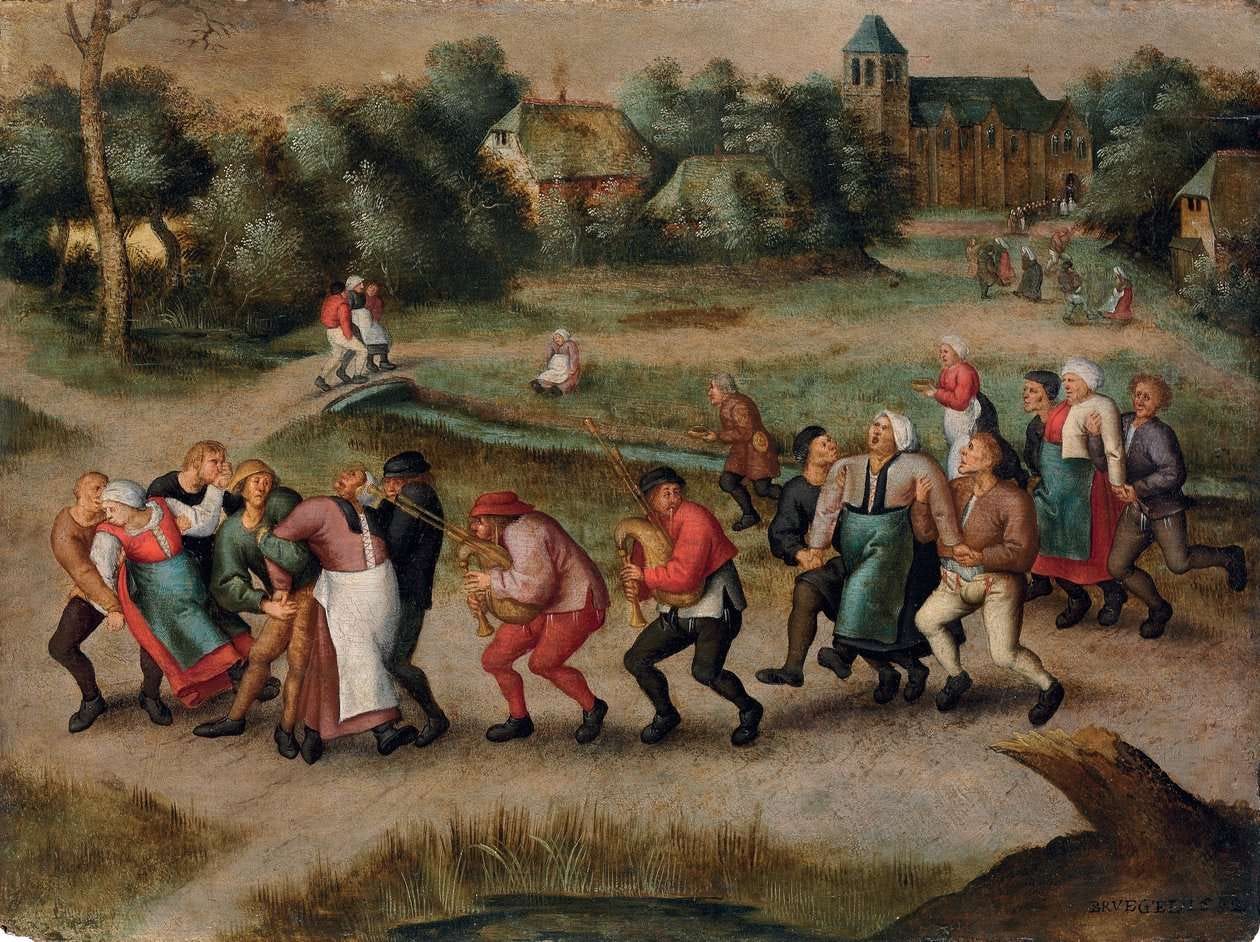
The human brain is built around a fundamental assumption: that the body belongs to the mind that inhabits it. Ergotism breaks that connection entirely. When the motor system is hijacked by external chemical interference, the person inside the moving body is still aware that something is catastrophically wrong, and completely powerless to intervene. It is full awareness of helplessness, which means the dancers of Strasbourg were witnesses to their own bodies destroying them, one involuntary step at a time.
A Society Pushed to the Brink
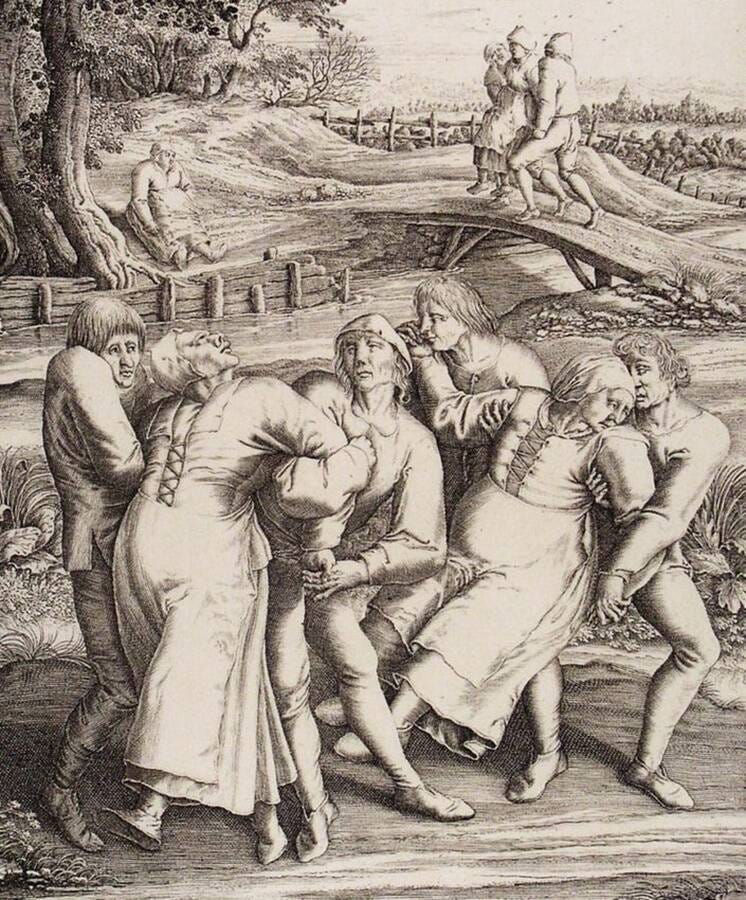
Strasbourg in 1518 was not a city at peace with itself. Years of failed harvests had pushed the peasant population into a state of chronic starvation where the body and the mind were both running on reserves that had long been depleted. Poverty at this level does something specific to human psychology that goes beyond physical hunger. Researchers who study prolonged scarcity consistently find that communities living under sustained material deprivation develop a baseline neurological fragility, a permanent low-grade state of alarm that leaves the nervous system primed for catastrophic responses to stimuli that a well-fed, secure population would absorb without incident. The peasants of Strasbourg were people whose psychological immune system had been systematically worn down by years of circumstances entirely outside their control.
Into that exhausted population came the burden of religious terror, specifically the fear of Saint Vitus, a Christian martyr whose name had become attached to a divine curse believed to inflict uncontrollable dancing on those who had sinned or fallen out of God’s favor. When the dancing began, many who witnessed it did not immediately see illness. They saw evidence of a curse, which meant their response was filtered through layers of dread that had nothing to do with medicine and everything to do with the terror of divine retribution.
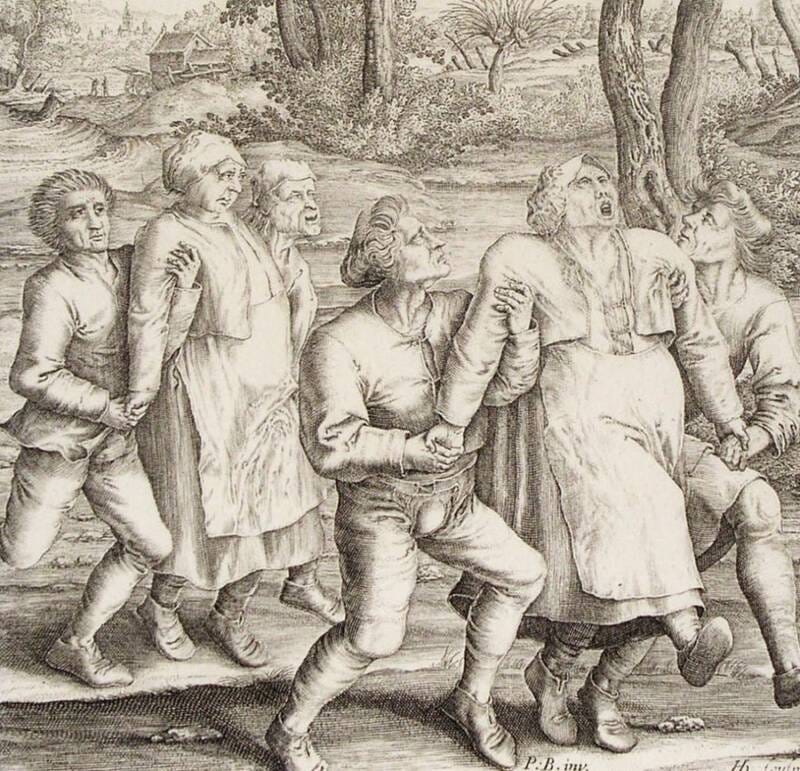
Collective trauma works on a population the way prolonged pressure operates on a geological fault line. The stress accumulates invisibly, distributed across thousands of individual lives, until a single event introduces the fracture point and the whole structure gives way at once. What made Strasbourg uniquely vulnerable in 1518 was the convergence of every factor simultaneously: physical depletion from famine, chemical disruption from contaminated grain, spiritual terror from an active curse tale, and a social environment where everyone around you was living through the same breaking point at the same time. Mass psychogenic illness finds populations that have already been brought to the edge by forces they could neither name nor escape, and Strasbourg in the summer of 1518 was a city that had been standing at that edge for a very long time.
Stories buried in history rarely survive without people who care enough to dig them up. This write-up exists to do exactly that. If this writing moved you, or taught you something worth carrying forward, support it.
Is there new information? I’ve seen several sources indicate that Ergot poisoning restricts the blood flow in the limbs causing excessive pain and even can lead to gangrene. It doesn’t look like there are any of the classic Ergot poisoning symptoms besides the dancing to exhaustion and death. I do enjoy what you produce and share.
Ohh so that's what happened