Celestial Dread
How Solar Eclipses Triggered Mass Hysteria in the Ancient World

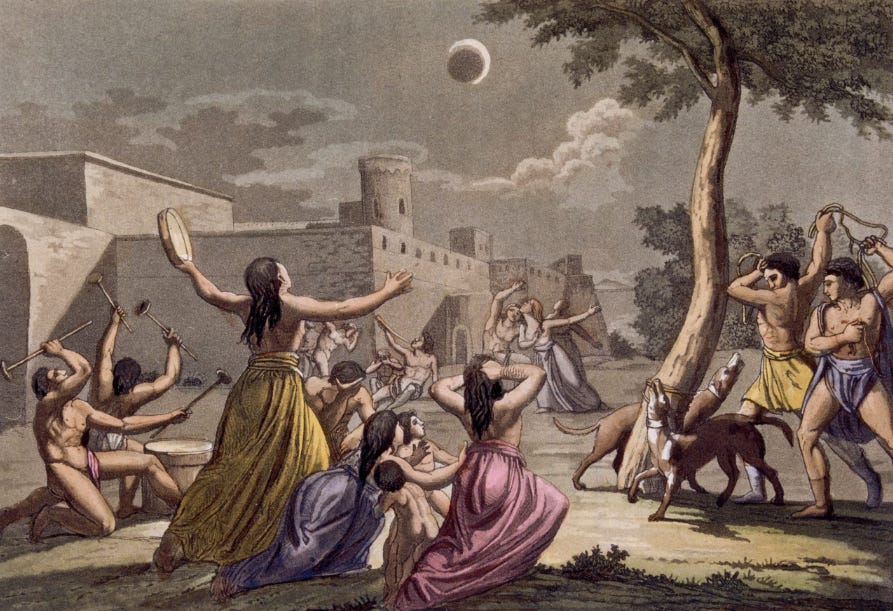
The human nervous system is not built for a sky that turns black at noon. Modern neuroscience tells us that the brain’s threat-detection system, the amygdala, responds to sudden darkness by flooding the body with adrenaline and cortisol before any conscious thought has a chance to form. For ancient people who had no understanding whatsoever for what they were witnessing, that alarm never got a signal to stand down. The panic was the body doing exactly what it was designed to do when the rules of the physical world appeared to break.
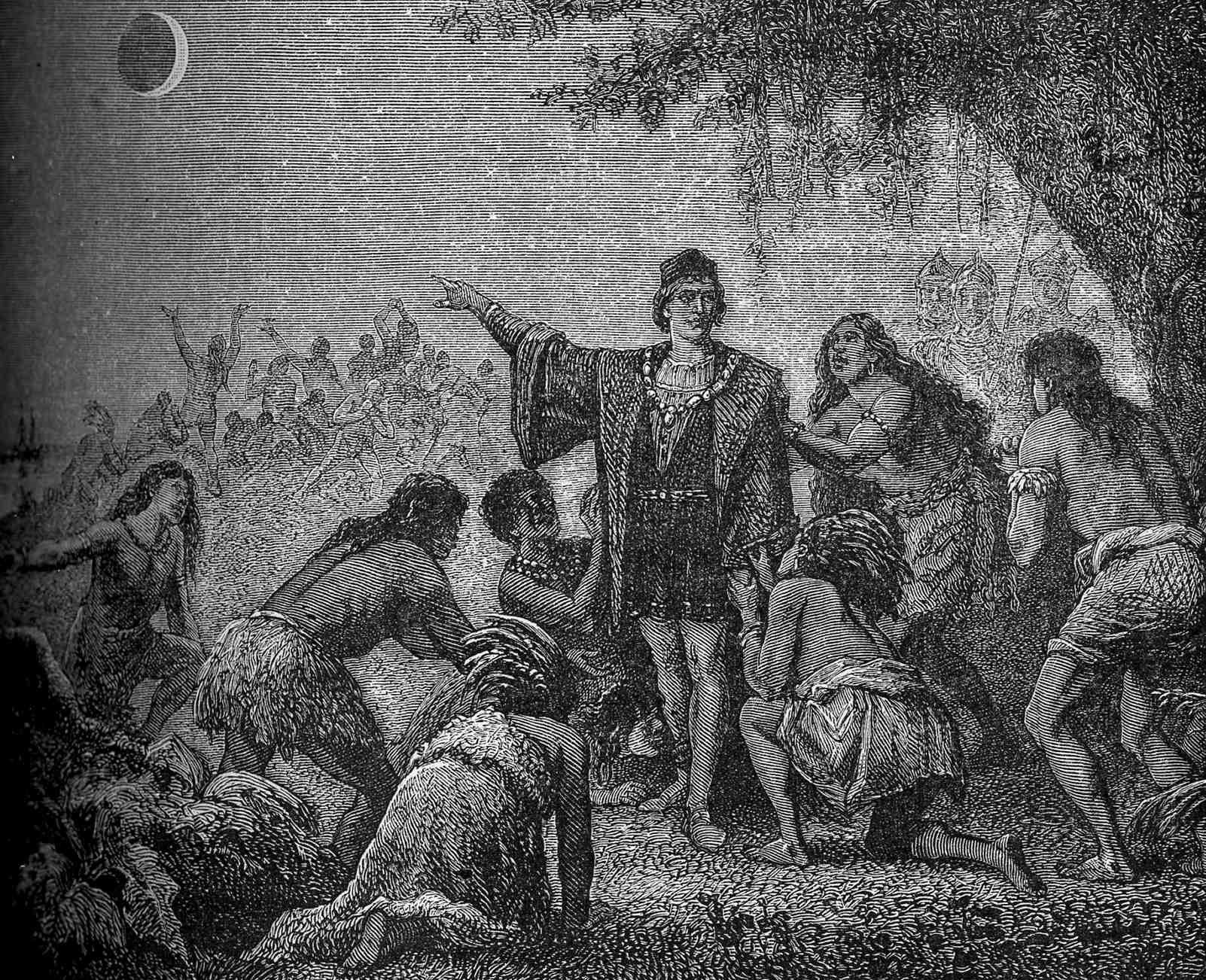
What made eclipses destabilizing, was that the sun had absolute ontology in the ancient mind. It was the fixed point around which all order, and all time itself was organized. Mesopotamian, Egyptian, Greek, and Chinese cosmologies all converged on the sun’s regularity, and that was the clearest evidence that the gods were present and that the universe was governed. When that regularity shattered without warning, the conclusion was that something irreversible had happened. An eclipse covering the sun at the height of the day, felt like an ending.
That perception of finality is what caused normal social behavior to breakdown. Ancient records from China describe officials prostrating themselves and beating drums to call the sun back. Herodotus recorded that the Lydians and Medes, in battle, dropped their weapons mid-fight when an eclipse darkened the sky in 585 BCE and immediately negotiated peace, interpreting the darkness as divine revocation of the war itself. In societies where law, and civic order were understood as expressions of divine will, a sign that the gods had withdrawn their presence, ended the logic that made obedience feel rational.
Orchestrated Chaos and State Control
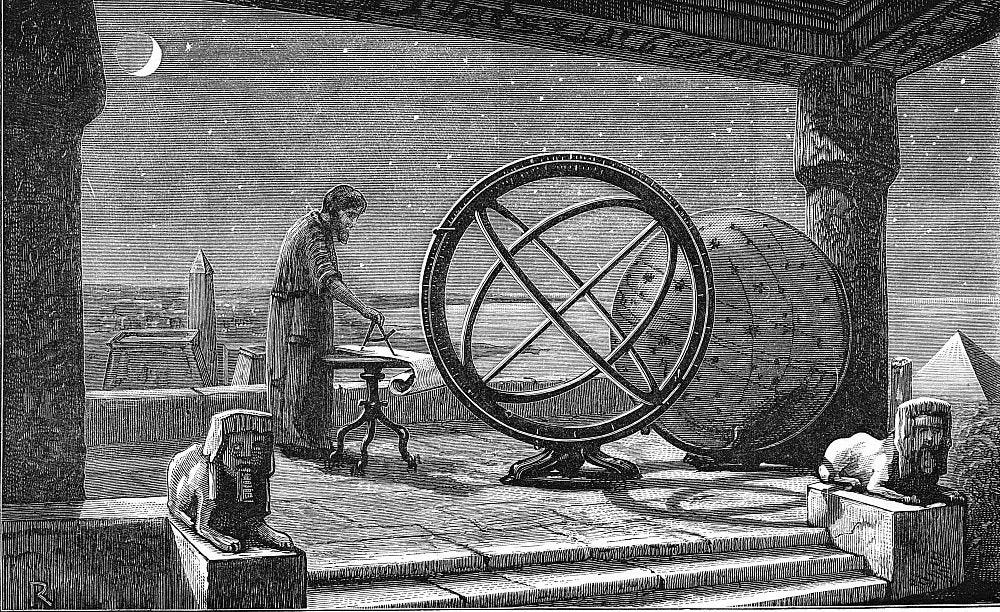
The most consequential secret in the ancient world was the ability to predict when the sky would go dark. Babylonian astronomers had, by around 700 BCE, identified the saros cycle, an 18-year repeating pattern that allowed them to forecast eclipses with reasonable accuracy. This knowledge was zealously confined to temple priests and royal courts. When an eclipse arrived, the priest who stepped forward to “intercede with the gods” and restore the sun was cashing in on years of record-keeping. The ritual drama of beating gongs, and making sacrifices was timed to conclude precisely as totality ended and the sun re-emerged, which it was always going to do. What the crowd witnessed was a man commanding the heavens. What was actually happening was a state-managed performance, calibrated to create awe on a society-wide scale.
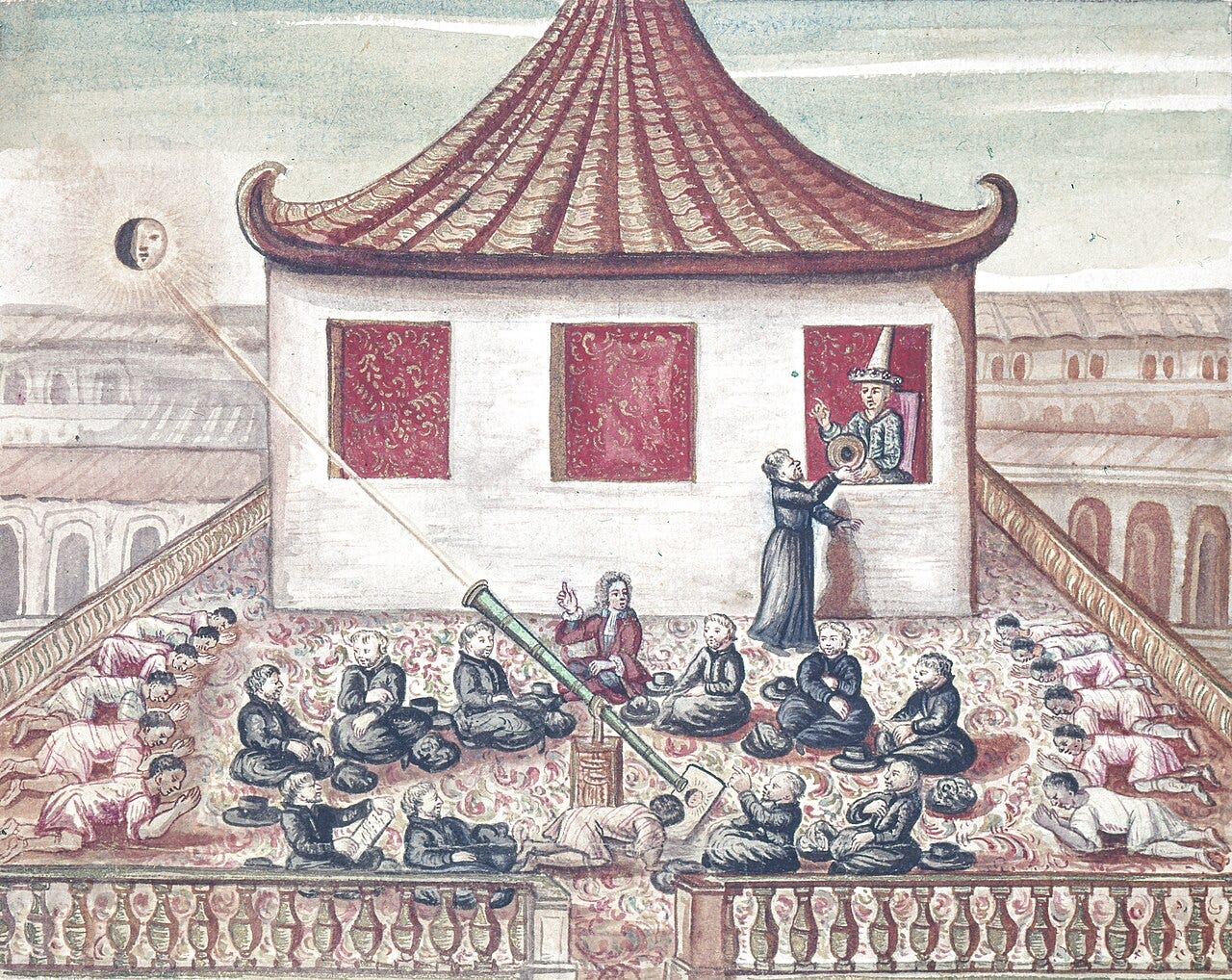
The political utility of that manufactured awe extended well beyond public theater. Eclipse periods were among the most dangerous times to be a rival of the throne, precisely because the cover was so perfect. In ancient China, the emperor’s mandate to rule was understood as a celestial grant, and a solar eclipse was read as a sign that the mandate was under review. This created a narrow window during which accusations of causing divine displeasure could be leveled at almost anyone. Court records from the Han dynasty show officials being removed, or executed in the aftermath of eclipse events, framed as individuals whose disloyalty had provoked heavenly anger. The public, already terrified and primed to believe that someone had offended the cosmic order, rarely needed much convincing.
Assyrian kings practiced a ritual called the substitute king ceremony, in which a decoy was placed on the throne during an eclipse period to absorb any divine punishment, while the real king temporarily stepped aside. When the eclipse passed, the substitute was killed, the king returned, and the entire episode was recorded as evidence of divine protection over the legitimate ruler. The ceremony was a legal mechanism that allowed a king to eliminate a designated enemy under ritual sanction, and re-emerge with his authority freshly consecrated by survival.
Weaponizing the Omen
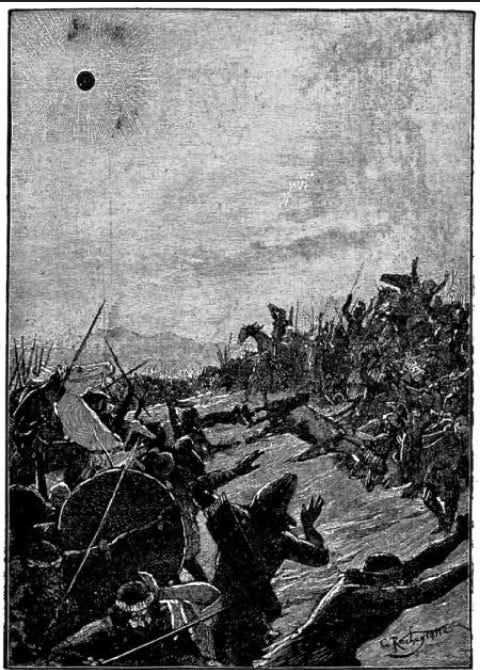
The eclipse of 585 BCE ended a war that had been grinding on for five years. When the sky darkened over the Halys River during the conflict between the Lydians and the Medes, both armies read it as an unambiguous divine veto on the entire enterprise. They stopped fighting on the spot, negotiated a peace treaty before the light had fully returned, and sealed it with a double marriage alliance. Herodotus recorded the event as though the speed of the settlement was the remarkable part, and it was. Two kingdoms that had been in military conflict reached a binding political agreement in the span of an afternoon because the sky went dark. What that reveals is that the eclipse altered the negotiating positions of kings, because refusing to accept the omen as a message would have been politically indefensible. Any ruler who looked at a darkened sun and chose to keep fighting was, in the eyes of his own people, declaring himself an enemy of the gods.
The belief that an eclipse foretold the death of a king was a state doctrine in multiple civilizations. In ancient China, the emperor was the Son of Heaven, and a solar eclipse was the sky withdrawing its endorsement. Chinese emperors were sometimes forced to issue formal self-denunciations during eclipse events, publicly confessing their failures and moral shortcomings to demonstrate that they had registered the warning. Assyrian records show that kings went into ritual seclusion during eclipse periods, transferring authority to proxies precisely because being seen on the throne while the sun was threatened was considered a provocation. In several documented cases across Mesoamerican cultures, eclipse periods coincided with the sacrifice of captured rulers from conquered territories, a way of offering the gods a king’s death before they could demand the sitting ruler’s own.
The return of the sun was judgment delivered, and the question of who had presided over the restoration determined who held authority going forward. Priests who had led the right rituals emerged with vastly expanded influence. Those who had visibly panicked, failed to perform the correct intercessions lost standing they rarely recovered. In several instances across Mesopotamian and Egyptian history, eclipse events were followed by significant reorganizations of temple hierarchies, with the astronomical priesthoods that had predicted and managed the event consolidating power at the expense of rival religious factions. The transition back to light was a reset, and the people who had positioned themselves correctly before totality got to write the terms of what normal would look like afterward.
If this write-up is the kind of writing you want to keep reading, consider supporting. Every contribution, however small, is what keeps the research alive.
fascinating insight
This is such a niche topic but I love it so much. Such a fun read