Built to Break You
What Gothic Cathedrals Were Really Designed to Do

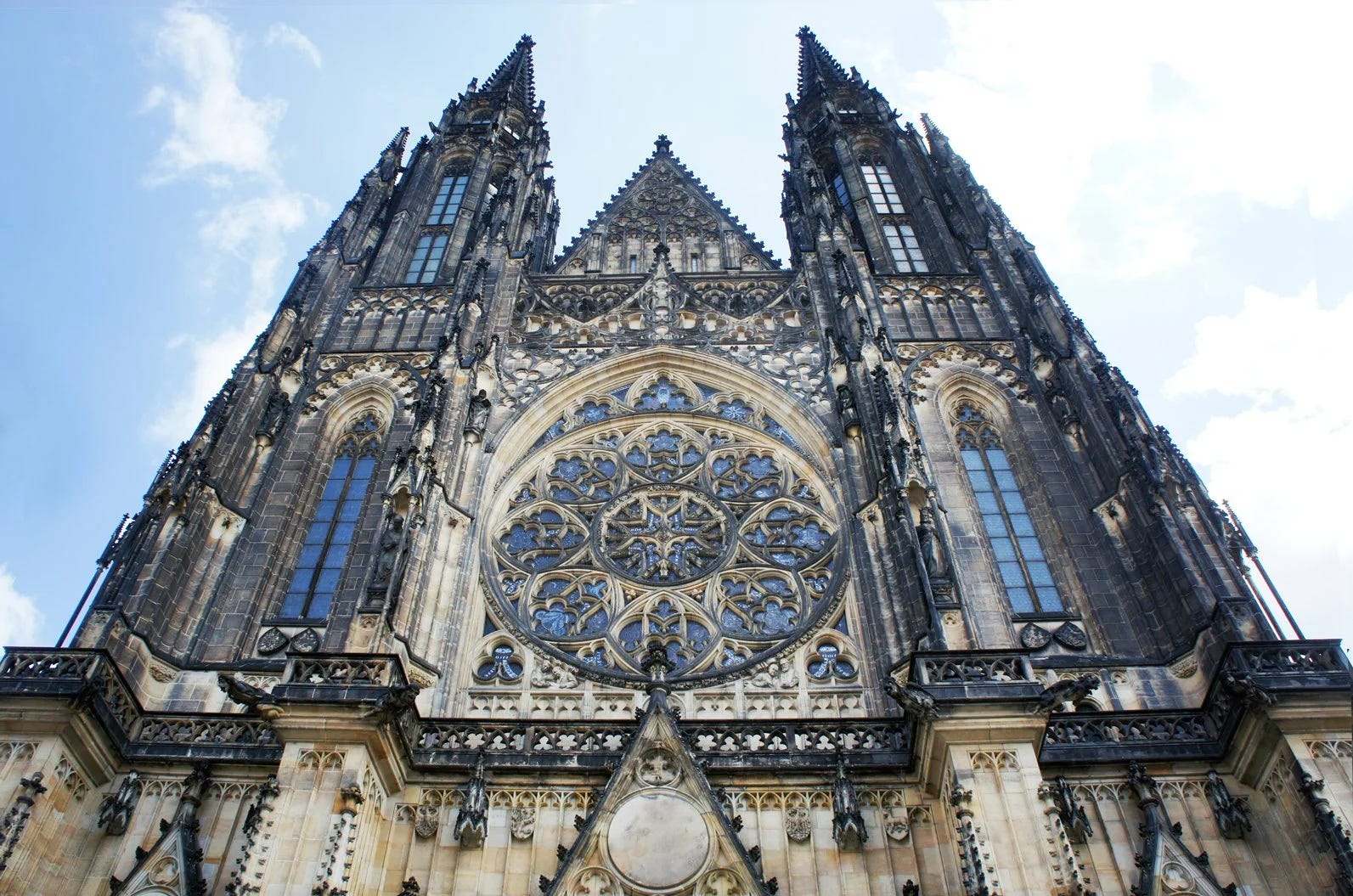
The question haunts anyone who studies these structures with clear eyes: did the master builders and bishops who commissioned Gothic cathedrals deliberately weaponize architecture to control through terror? The answer grows more uncomfortable the deeper you look. Medieval theologians wrote openly about fear as a tool of spiritual discipline, arguing that the dread of damnation served as the first step toward salvation. The Gothic cathedral became their instrument. You were meant to feel your stomach drop when you entered. You were meant to scan those carved tympanums above the doors and see yourself among the damned unless you fell in line. The building extracted your devotion through a precisely calculated assault on your nervous system.
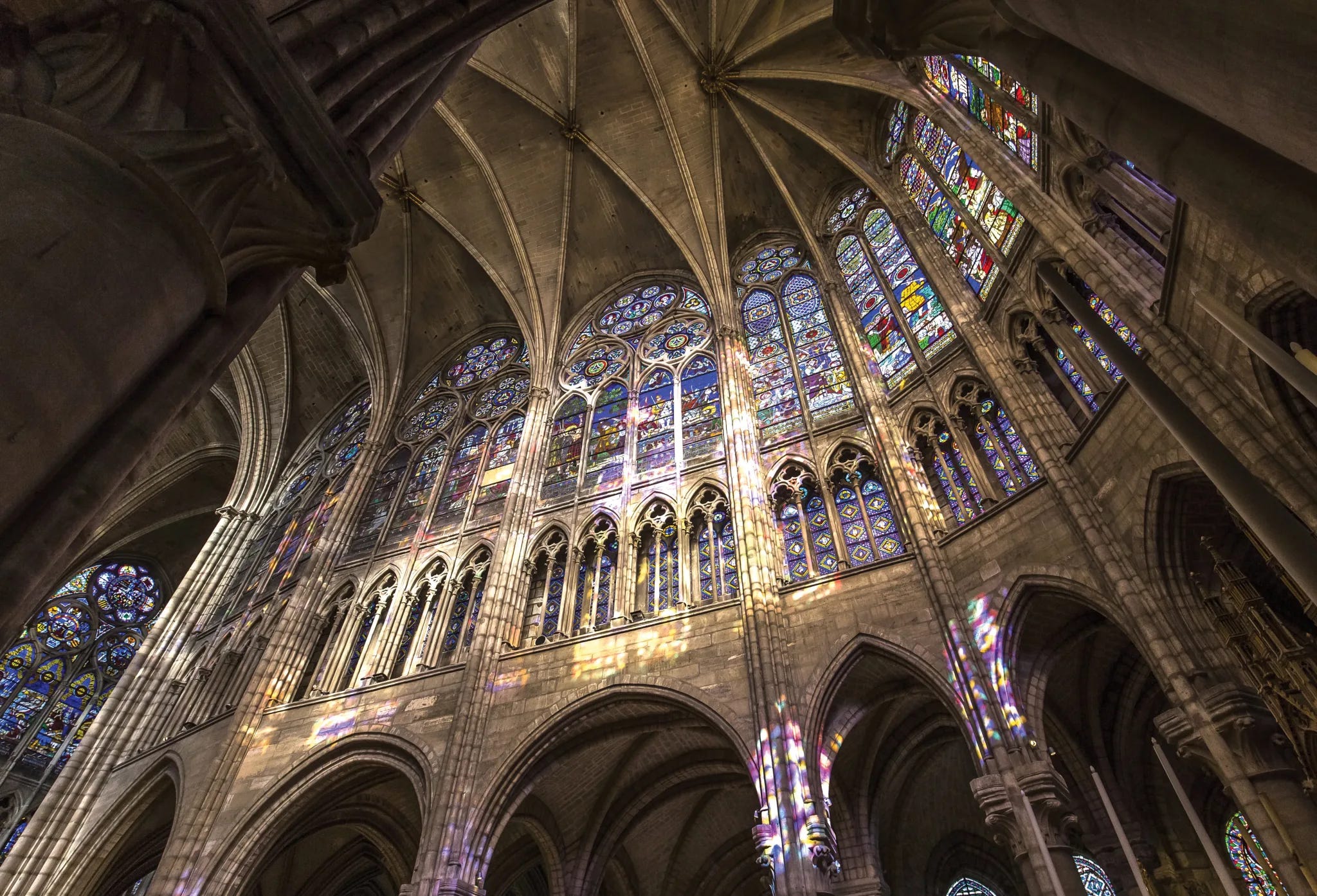
The shift from Romanesque to Gothic was more than an aesthetic evolution or structural innovation. Romanesque churches were heavy and grounded, their thick walls and small windows creating spaces that felt protective, almost womb-like. When Abbot Suger pioneered the Gothic style at Saint-Denis in the 1140s, he initiated something far more ambitious than letting in light or reaching toward heaven. He discovered that height and verticality could induce a specific psychological state, wonder with the fear of falling. The pointed arches and flying buttresses were methods of manipulating human perception and emotion on a mass scale. Within a century, every major European city was erecting these towering spaces of controlled terror, each one refining the techniques of awe and dread until entering a cathedral became an experience of systematic psychological domination dressed in the language of divine love.
Light & Shadow Play
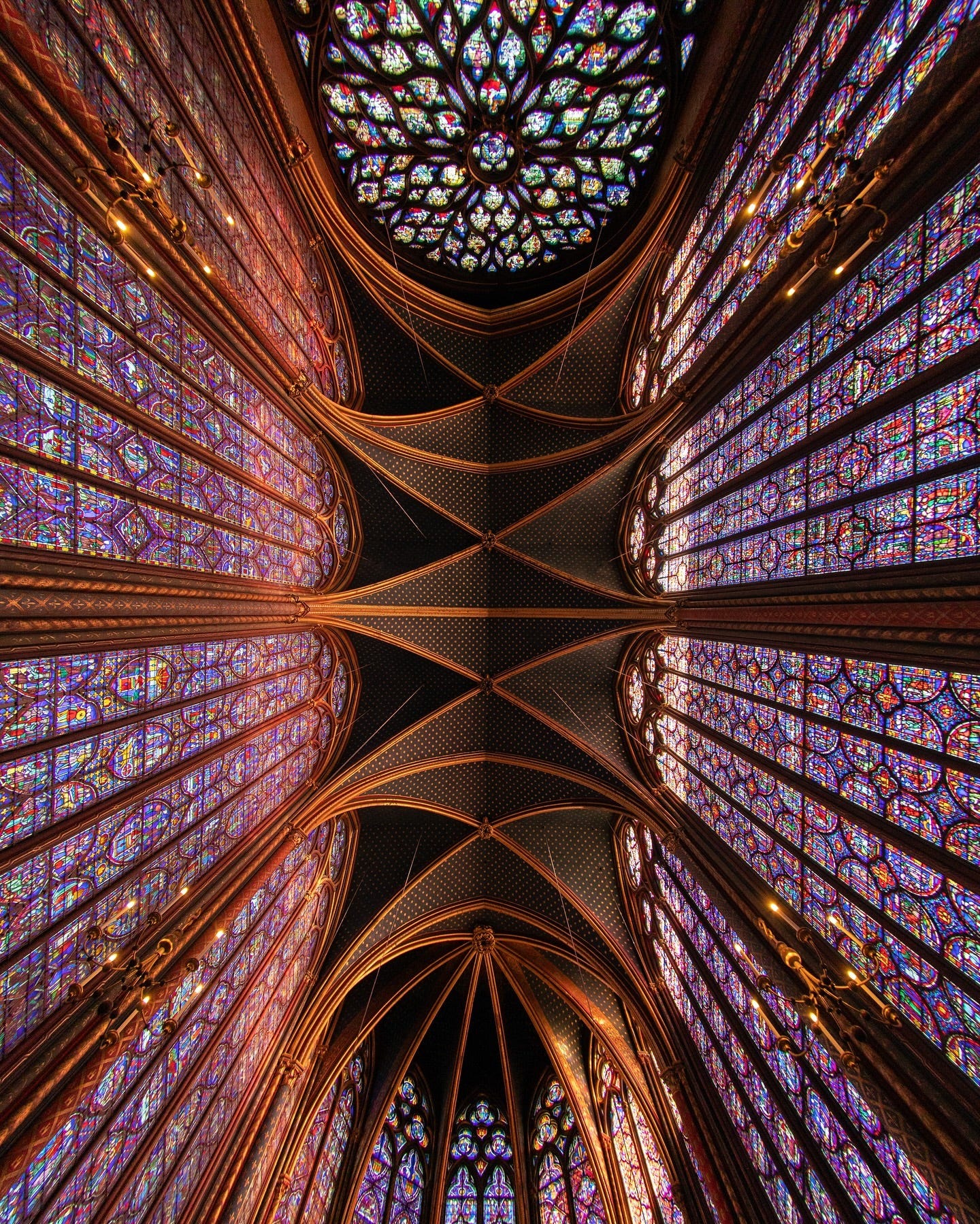
The stained glass windows of Gothic cathedrals function as sophisticated instruments of perceptual manipulation. When sunlight passes through layers of cobalt, ruby, and emerald glass, it changes into something no longer quite natural. The light becomes thick, almost liquid, pooling on stone floors in colors that don’t exist in the everyday world outside. This chromatic distortion creates a measurable disorientation. Your eyes struggle to adjust because the light sources keep shifting as clouds pass and the sun moves, never allowing you to settle into visual comfort. Medieval glaziers understood this effect. They deliberately used varying thicknesses of glass and inconsistent coloring techniques to create an unstable, shimmering quality. The light doesn’t illuminate the space so much as it drowns it in constantly shifting chromatic waves. You lose your bearings. The normal visual cues you use to judge distance and dimension become unreliable. In this altered state, suggestion becomes easier and rational resistance weakens.
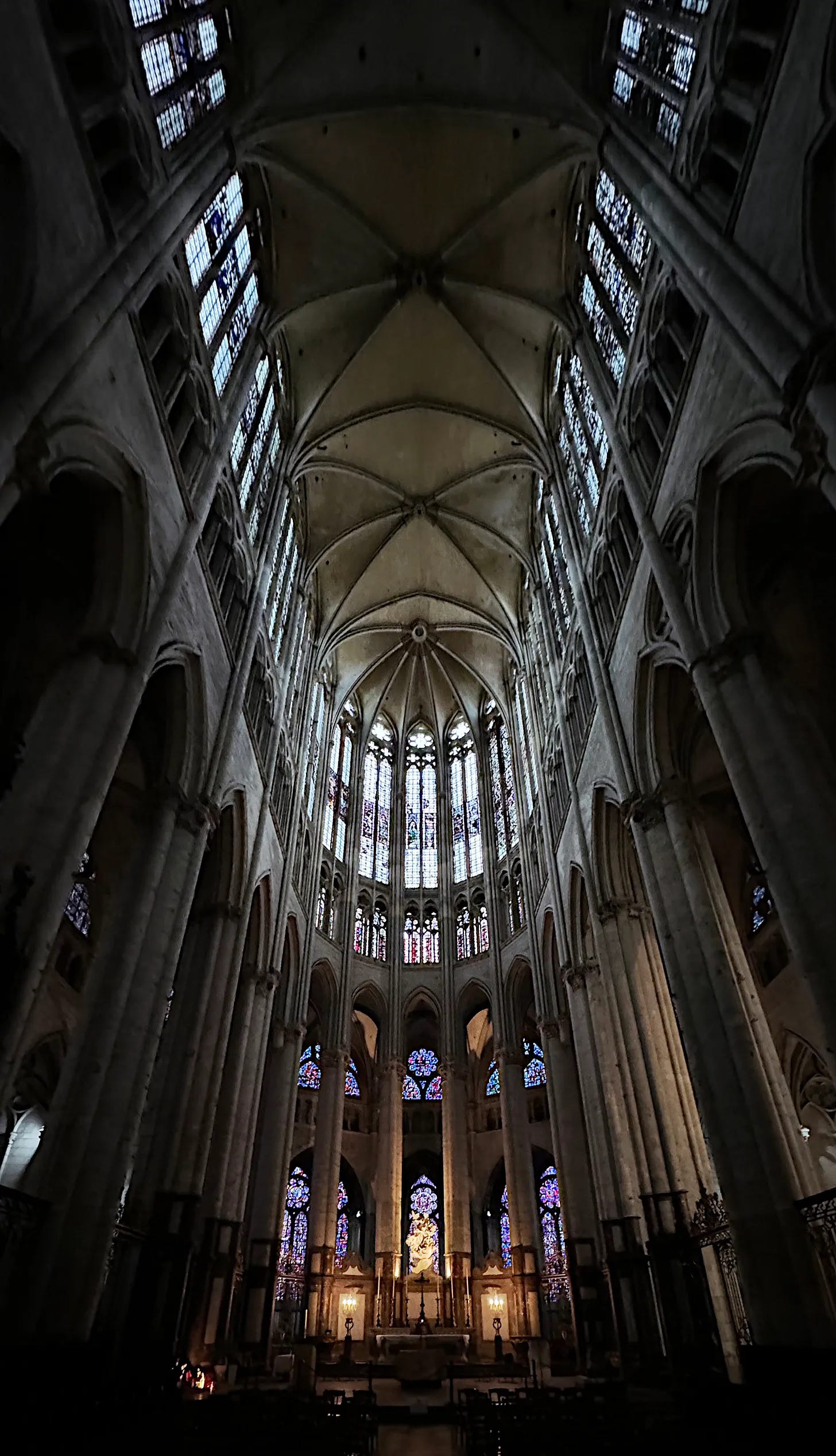
The vertical thrust of Gothic architecture operates on your proprioception, that internal sense of your body’s position in space. When columns rise thirty or forty meters on proportions so slender they seem to violate physical law, your brain receives conflicting information. You know intellectually that stone that thin cannot support such weight at such heights, yet there it stands. This cognitive dissonance triggers a specific response: your sense of scale collapses. The builders knew exactly what they were doing when they calculated these proportions. Documents from medieval building lodges show master masons working with ratios designed specifically to maximize the sensation of impossible height. They wanted you to crane your neck until it hurt, to feel your own body’s smallness as a physical ache. When you stand at the crossing of Beauvais Cathedral, the tallest Gothic vault ever constructed, the space above completely dwarfs you. Your individual existence becomes a problem to be solved through submission to something vast enough to fill that terrible emptiness overhead.
The calculated deployment of shadow completes the psychological architecture. Gothic cathedrals reserve their deepest darkness for specific zones: the ambulatory passages behind the altar, the side chapels where relics rest, the galleries high above the nave floor. These pools of shadow never receive direct light regardless of the sun’s position. They exist as permanent mysteries within the structure, spaces your eyes cannot penetrate even when you’re standing directly before them. The effect is magnetic. Humans instinctively want to resolve visual ambiguity, to see into dark spaces and understand what they contain. This keeps you in a state of heightened alertness, emotionally pliable, and ready to accept whatever interpretation of that darkness the church chooses to provide.
Acoustic Oppression
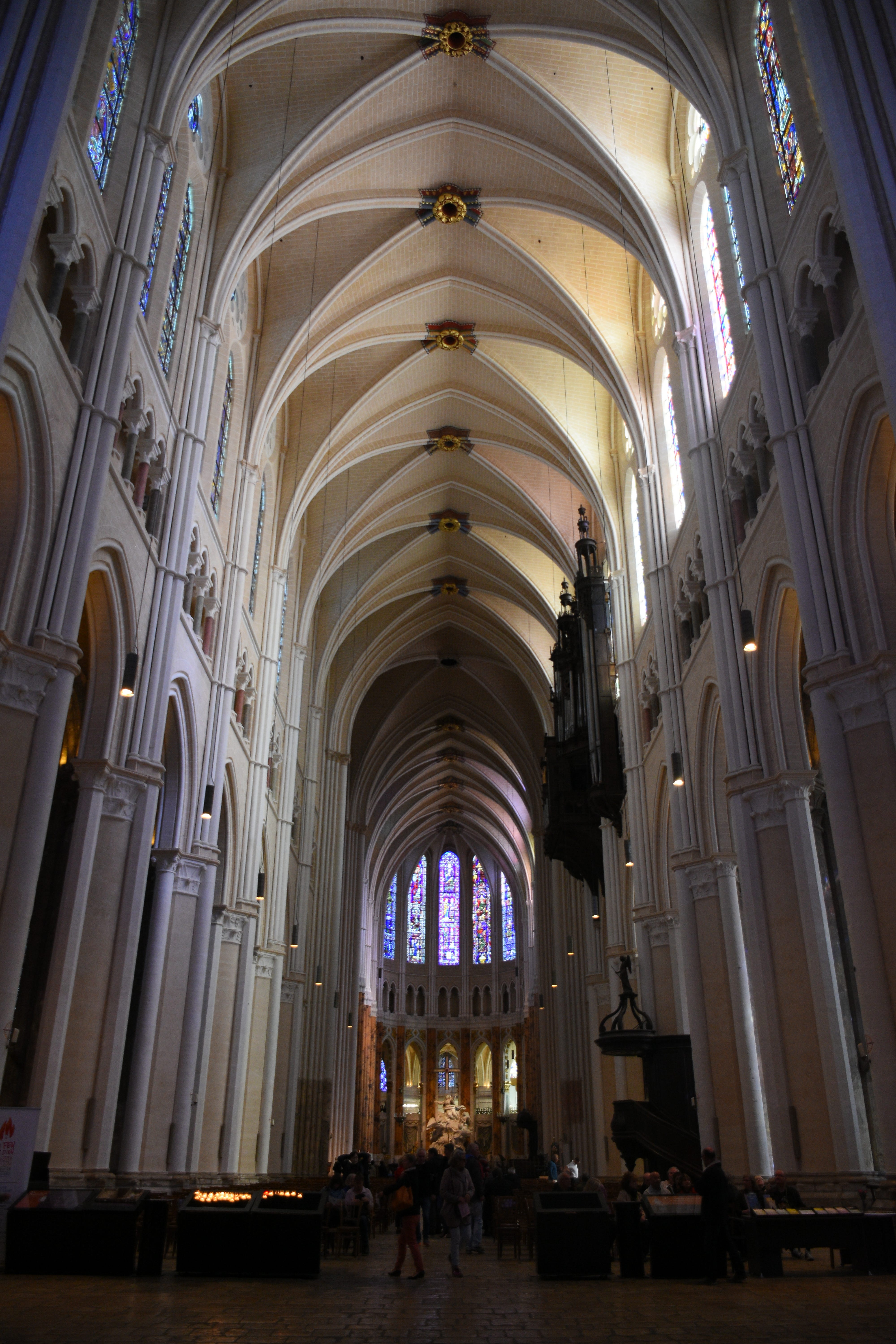
Stand in the nave of Chartres Cathedral and speak a single word. That word will return to you seven or eight seconds later, but it won’t sound like your voice anymore. The stone vaults stretch and distort the sound, multiplying it across countless reflecting surfaces until what comes back is something alien and authoritative. When medieval priests chanted the liturgy in Latin, a language most congregants couldn’t understand, this acoustic transformation became total. The words lost all connection to human speech and became pure sound, rolling through the space in waves that seemed to emanate from the building itself rather than from any visible source. Acoustic studies of Gothic cathedrals reveal reverberation times far longer than necessary for clear speech or music. The builders wanted comprehension to fail, and meaning to dissolve into overwhelming sensation. When you can’t locate the source of a sound, when words become unmoored from the mouths speaking them, authority becomes absolute and unquestionable.
The manipulation of silence proves even more psychologically potent than the manipulation of sound. Gothic cathedrals create what acousticians call “room tone,” a particular quality of quiet that feels dense and populated rather than empty. The vast stone interior generates subtle ambient noise from air movement, the settling of masonry, the distant creaking of timber roofing, all of it reflecting and re-reflecting until the silence itself seems to breathe. When you sit alone in that silence, you become hyper-aware of your own sounds: the rustle of clothing, the scrape of a shoe, your own heartbeat pulsing in your ears. Every small noise you make gets seized by the acoustic space and thrown back at you. You feel exposed, as if the building is listening to you, cataloging your smallest movements and finding them wanting. This acoustic isolation makes internal dialogue intensify. The cathedral forces you inward while simultaneously suggesting that your internal world is being monitored by something vast and invisible.
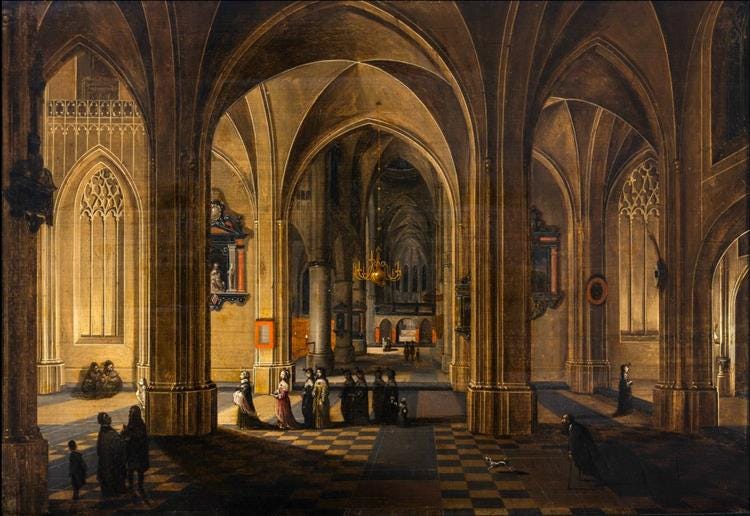
When voices do join together in chant or hymn, the acoustic design annihilates individual identity entirely. A choir of twenty singers becomes an undifferentiated wall of sound, impossible to parse into separate human voices. You cannot pick out your neighbor’s voice or even clearly hear your own contribution to the collective sound. Medieval choirmasters positioned singers strategically throughout the cathedral to maximize this blending effect, placing voices in side chapels and galleries where the sound would merge in the nave into something that seemed to come from everywhere and nowhere. The psychological message is surgical in its precision: your individual voice matters only when absorbed into the collective, only when it loses its distinct character and becomes part of something larger. Any attempt to stand out, to assert individual expression, gets swallowed by the acoustic properties of the space. The cathedral teaches submission through sound itself, making solo speech feel small and shameful while making unified chant feel like the only form of expression capable of filling such immensity.
If this article opened your eyes to something you hadn't considered before, consider supporting this work. Your contribution keeps these deep dives free and accessible to anyone curious enough to question the structures we've inherited.
You did a good job describing the effects pessimistically. Do you have any written sources to confirm their oppressive intent?
Very interesting thesis! Thanks for putting this together.