Beautiful Grief
The Dark Craft That Turned Victorian Loss Into Wearable Art

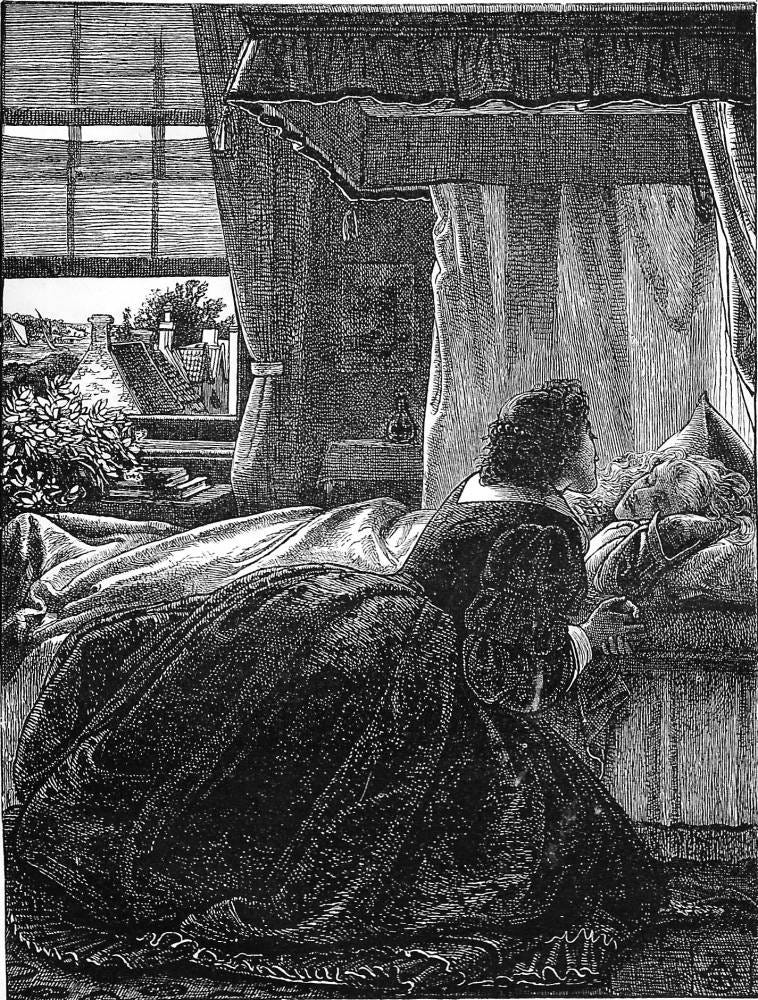
Death in the nineteenth century happened in the house where the family ate and slept. Infant mortality rates across Britain and America hovered at devastating levels throughout much of the 1800s. The bereaved washed the body and they stayed with it through the night. This proximity to the physical fact of death was a necessity, a way of metabolizing a loss that words could not yet reach.
Unlike skin, and everything else the body eventually surrenders, hair resists decomposition. A lock clipped from a dead child’s head in 1847 would remain chemically and structurally intact today, still with the exact color and curl it had in life. The Victorians knew this, even without the forensic science to explain it. Hair was the body’s most durable residue, the part of a person that refused to become past tense.
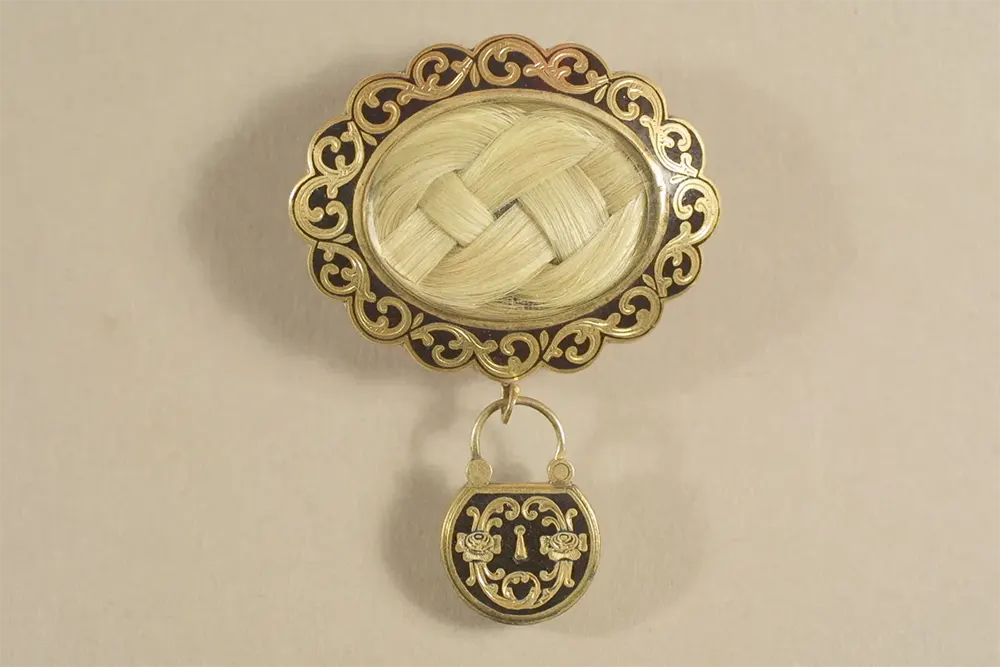
In the seconds and hours after a death, there is an instinct to hold something, to close the hand around some proof that the person was real and present. Hair became that proof in a way nothing else could. It could be braided, pressed under glass, worked into brooches, bracelets and memorial rings. What the Victorians created around this material was a set of craft traditions and social conventions designed to make grief portable, and in some sense communicable to the living world.
Black Enamel and Jet
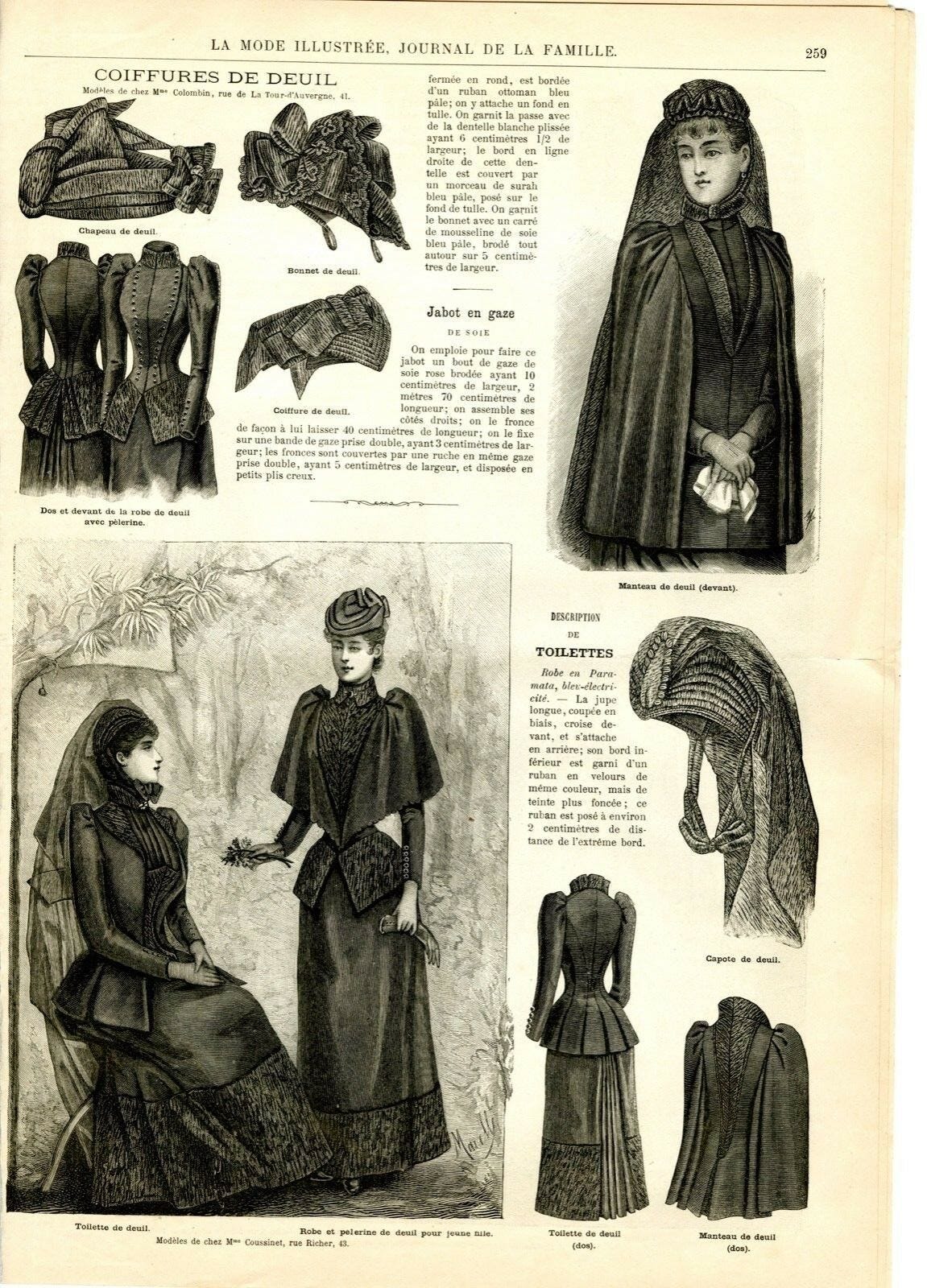
Victorian mourning was a codified public performance, and the materials a grieving person wore announced their exact position within that performance to anyone who knew how to read them. In the first year after losing a spouse, a widow was expected to wear full mourning: matte black fabrics, no jewelry except pieces made entirely from jet or black enamel, and nothing decorative for its own sake. As months passed, the code relaxed in precise increments. Half-mourning introduced grey, lavender, and white, and allowed the reintroduction of certain metals. Appearing in the wrong materials too soon was a declaration that the grief was shallow.
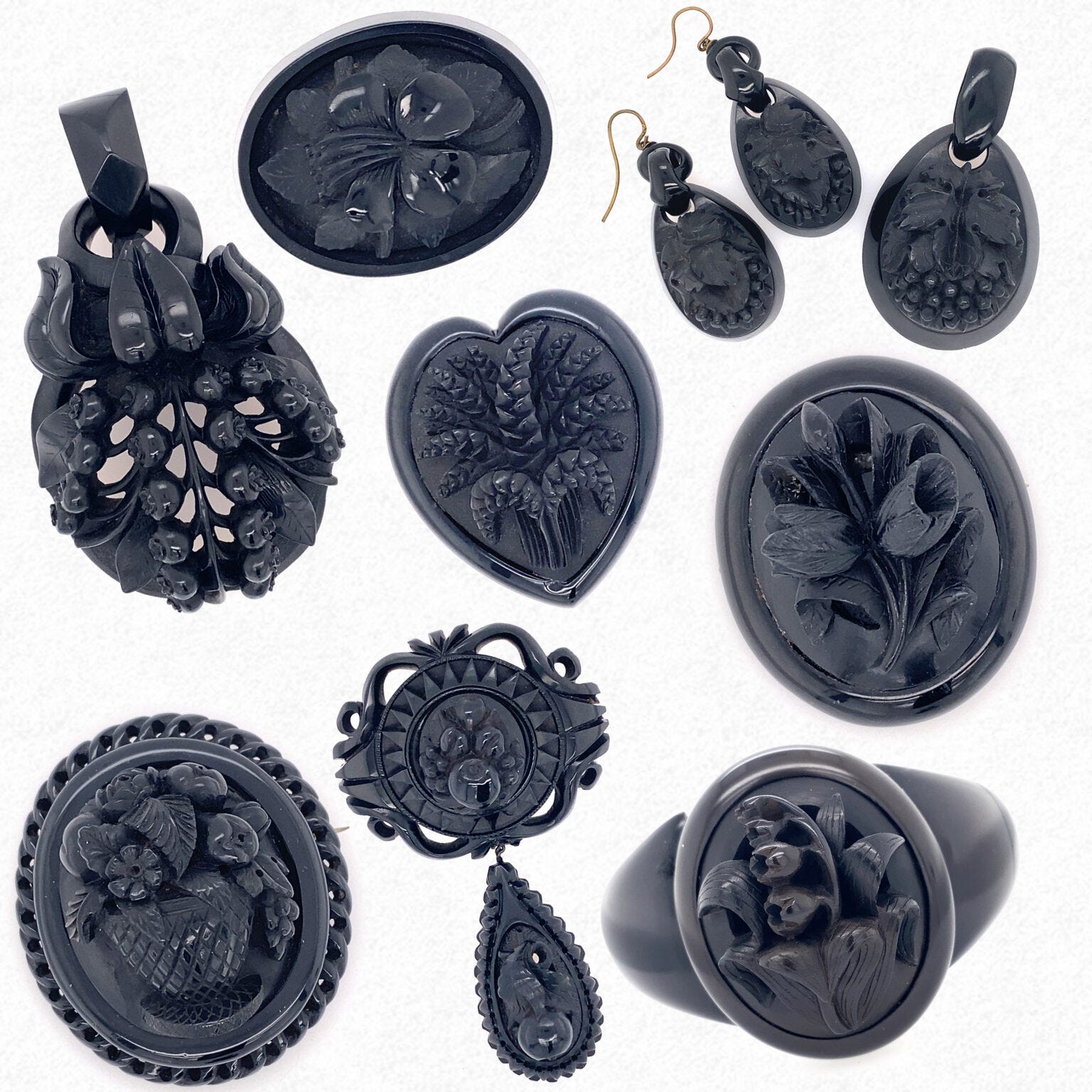
Whitby Jet, quarried from the cliffs of the North Yorkshire coast, became the prestige material of Victorian mourning largely because of its qualities under a craftsman’s hand. It is fossilized wood, compressed over millions of years into a dense black that takes a high polish. The artisans of Whitby produced brooches, bracelets, lockets, and earrings with carved floral motifs, weeping figures, and inscriptions worked into surfaces no larger than a thumbnail. Black enamel had a parallel function in goldsmithing, allowing jewelers to cover rings and pendants in a flat, light-absorbing black. Both materials absorbed light rather than reflecting it, as though the piece itself was in a state of mourning.
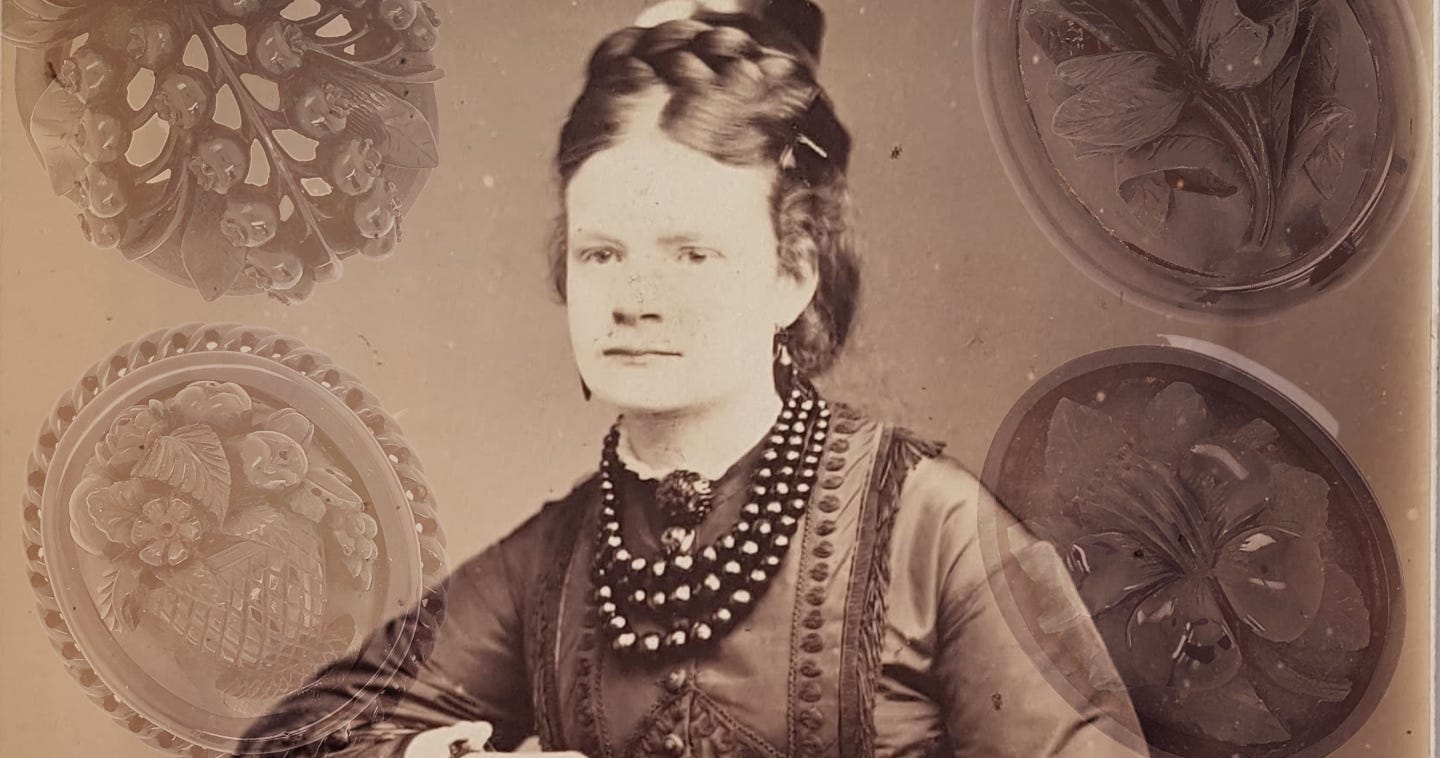
What these objects accomplished socially was something close to a shared emotional dialect. A woman wearing a jet brooch containing a panel of hair beneath glass was telling anyone who saw her that she had lost someone, and that she intended to carry the person with her in a visible way. The pieces gave form to a state that had no other outlet. They were, in the most literal sense, emotional signage worn against the skin.
The Art of Hairwork
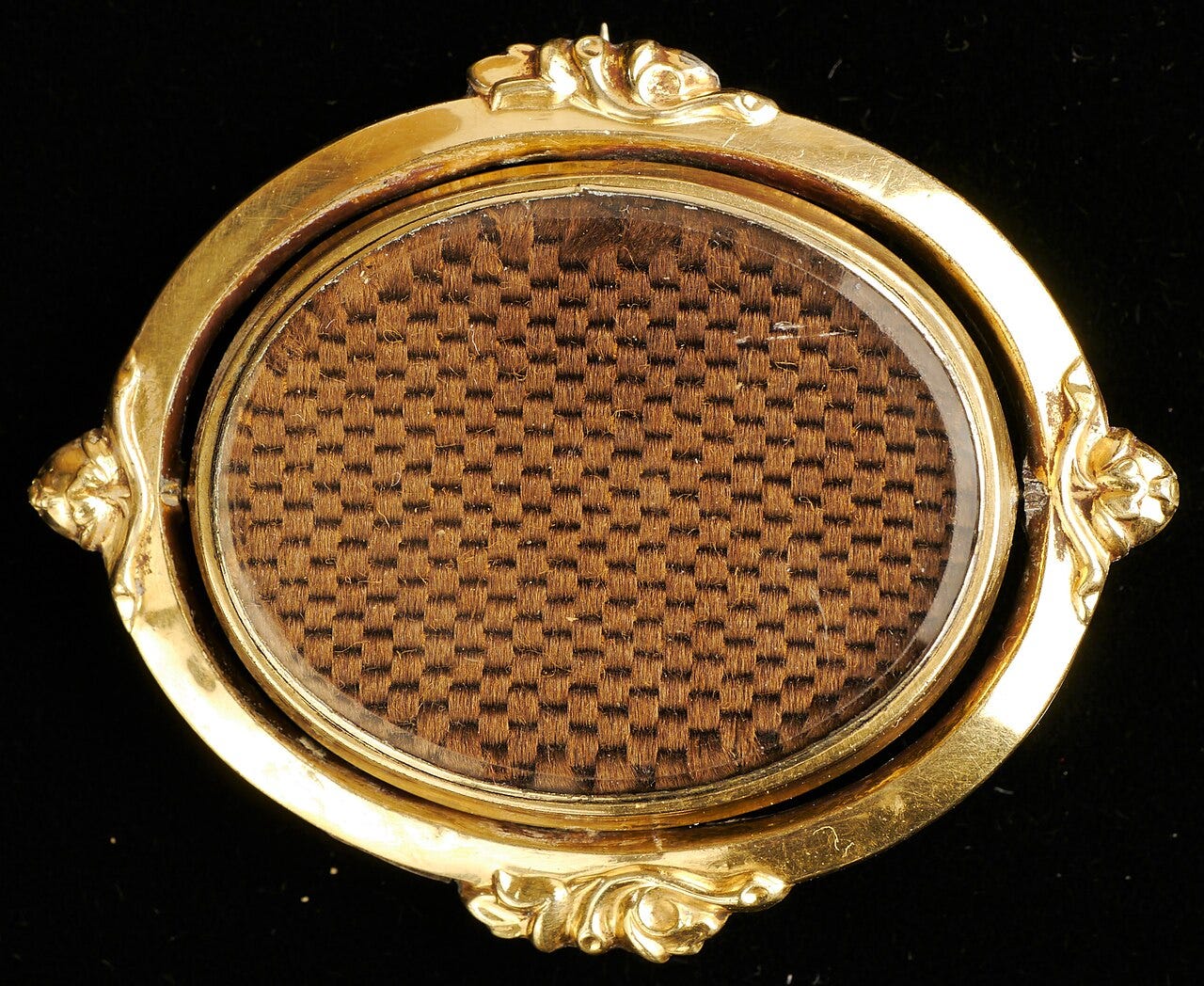
The demands of Victorian hairwork were considerable, and the results were often astonishing. Working with hair collected from the dead required boiling the strands first to remove oils, then sorting them by length and texture before the actual construction began. From this material, craftswomen and professional hairworkers produced watch chains, bracelets, and brooches. The better pieces required the patience of a miniaturist and the structural thinking of a weaver. Hair does not take glue well, it resists being forced, and a piece made without proper tension simply collapses. The women who produced these objects were actually practicing a craft that demanded skill accumulated over time.
Hairwork manuals circulated widely through the mid-Victorian period, and the craft was explicitly framed as something women did at home in the weeks and months following a death. Women were expected to maintain the household, manage the children, and present a composed exterior to the world. Sitting alone with a dead child’s hair in your hands, learning by slow repetition how to make it hold a shape, was one of the few spaces where the full burden of what had happened could be acknowledged without apology.
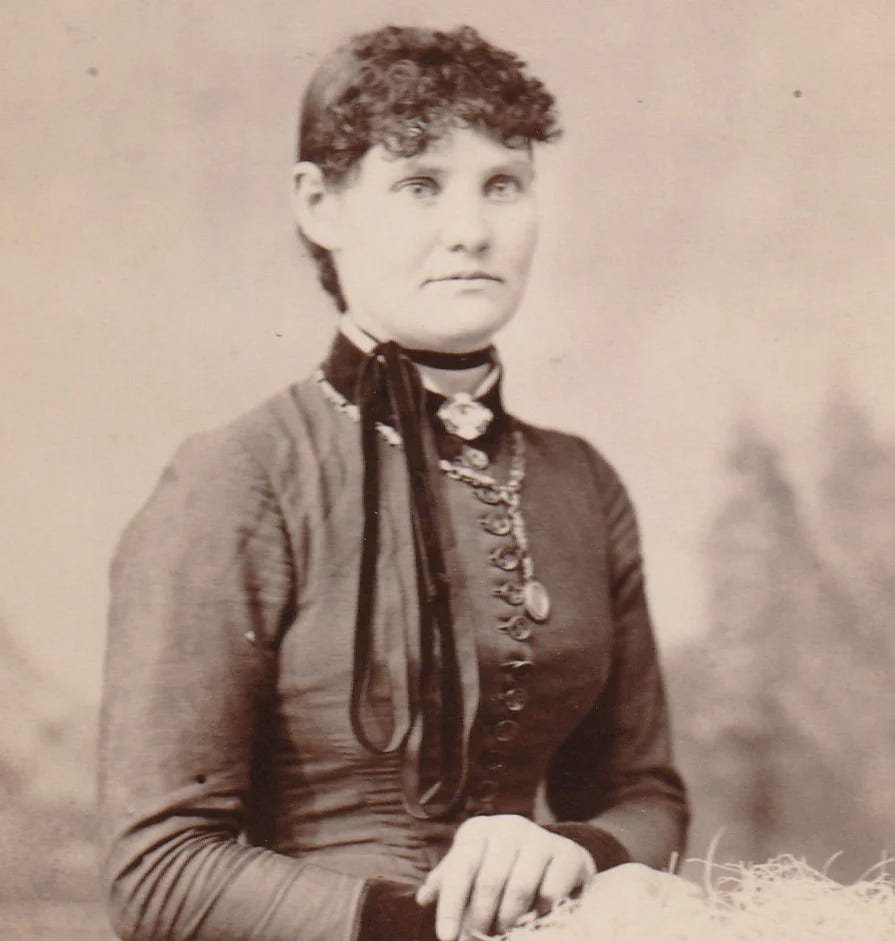
Hair contains the DNA of the person it came from. A bracelet from a dead husband’s hair, worn against the pulse point of a living wife’s wrist was the closest a body could come to remaining in touch with another body that no longer existed. The line between memorial object and physical remnant dissolves entirely when you think about that. These were the dead, reformed into something the living could wear.
If this piece on Victorian grief and the objects left behind moved you or taught you something, consider supporting.
There's something so touching about the care and time that went into these mourning pieces, especially when they were made from something so personal.